Galapagos Sea Lion Pups (Everyone’s Weak Spot, Even If We Don’t Want to Admit It)
It’s hard not to feel a warm, fuzzy feeling when we’re greeted by the presence of Galapagos sea lions. They have that playful, innocent gaze we love about dogs, but with the body of a mermaid. But no doggy paddling for them, no. These aquatic experts are sleek and fast in the water, and they are definitely a Galapagos favorite, even if they do have a habit of intruding on a lot of space that’s meant for humans (such as benches and docks around the inhabited areas of Galapagos).
The reason for this blasé and confident behavior of theirs? You guessed it! They basically own the archipelago while we humans are just mere visitors. But that doesn’t stop us from marveling at their little snouts or having a mini-meltdown at the sight of Galapagos sea lion pups. Luckily, you’ll be able to really get acquainted with these guys during your Galapagos Cruise since they can be seen on just about every island.
As much as you would like to: Do not touch the pup!
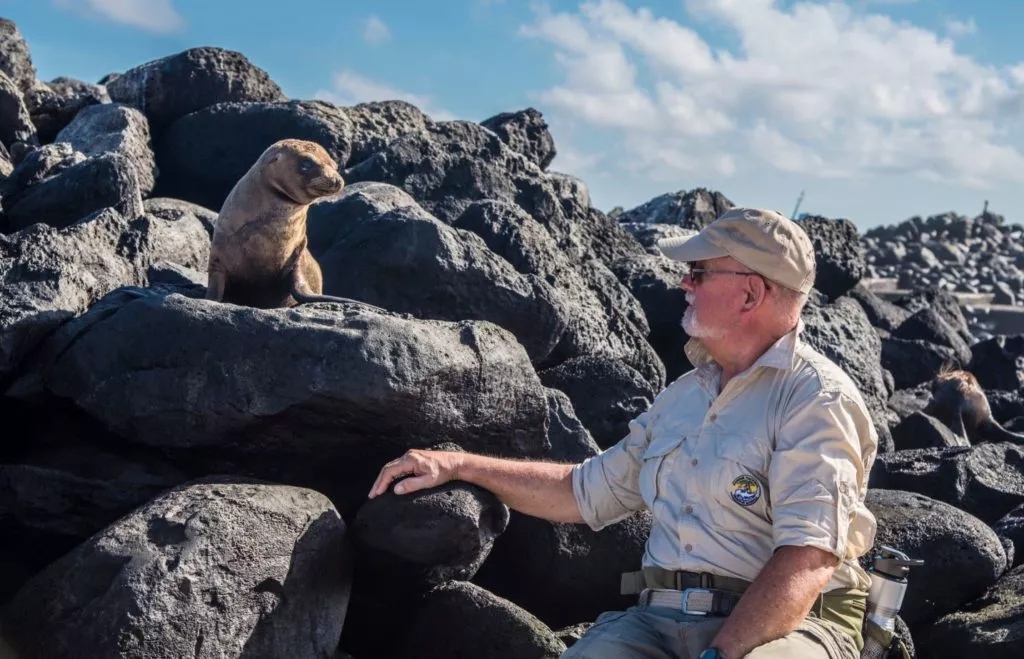
Sea lion pups are so adorable to look at and tend to be so playful that humans are often tempted to pet them. As is the case with all species throughout the islands, humans are forbidden to touch them, even if it’s just in a playful manner. The Galapagos National Park requires all locals and visitors to keep a distance of at least 6 feet (2 meters) from animals.
This requirement is two-fold: In part, it is meant to keep you safe because you never know how an animal will react; and secondly, touching them could gravely affect their well-being. Human-carried viruses and bacteria could be passed to the animals, and something as innocent as the human smell can “glue” itself to them. In the case of sea lion pups, it can cause them to be rejected by their mothers.
Sea lions, naturally curious, really like to get close to humans and play around with objects. They might try to quickly rub up against you as they swim by, and they are also known to be good companions to divers and snorkelers because they like to play with the bubbles that come out of our diving masks. Simply put: You’ll be fascinated by how unafraid they are of humans. But just remember, do not try to touch them! Just be a respectful and thankful observer. There aren’t many places in the world where wildlife gets so close to humans without a hint of fear.
Mothers and their Pups
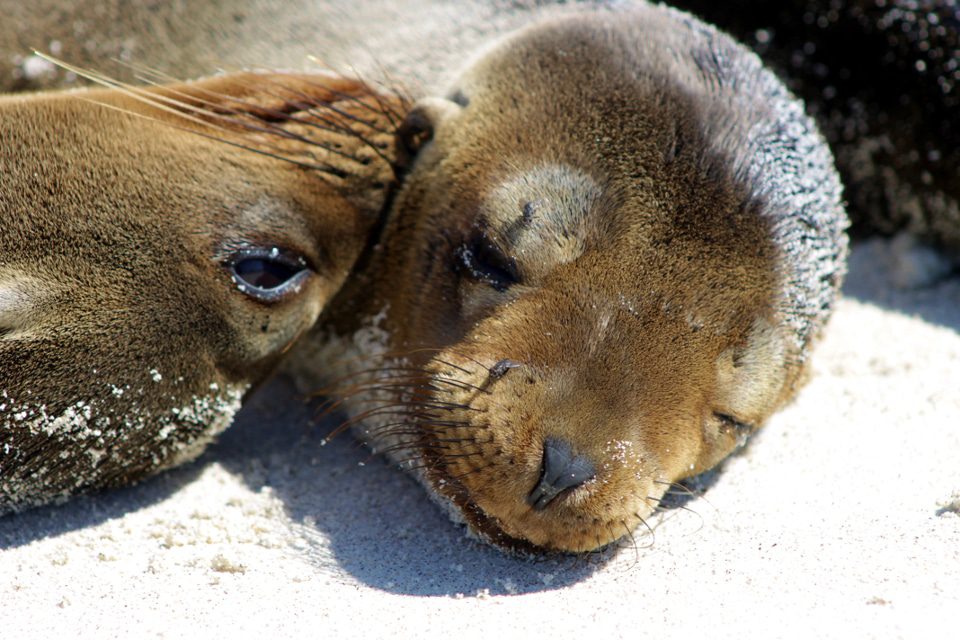
During the first week after birth, mothers stay with their pups on the beach and spend their time nursing them. After this short period, they go into the sea every other day to find food, often leaving the pup on its own on the beach. When she comes back, in order to find her pup, mother sea lions utter a special bark that their pup will recognize.
Usually pups respond to their mother’s call right away but the mother won’t nurse the pup until she’s smelled it and made sure it’s actually hers and that it hasn’t been touched by humans. Mothers do not tend to be too overprotective of their pups, often letting them play around in the water as they please or leaving them at the beach on their own for long periods of time.
General Information about the Species
Galapagos sea lions, Zalophus wollebaeki, are part of the eared seal family (Otariidae). They are more efficient walkers than their cousins from the true seals family (Phocidae) because of their strong forelimbs and rotatable hind flippers. The population of sea lions in the Galapagos Islands is estimated to be around 50,000 individuals, which can sound like a large number. However, due to their concentration in such a small geographical location, they are considered an endangered species. A strong weather anomaly, like the El Niño phenomenon, can cause a significant decrease in their numbers due to the lack of food that’s caused by the increase in water temperature.

Melissa Altamirano
Eduardo Silva

Carolina Escobar
Melissa Altamirano
Eduardo Silva
Carolina Escobar