Skip to content
Can you imagine what a house without rules would be like? It’s pretty clear: plain chaos all around. That’s exactly why the Galapagos National Park Rules are so strict. But don’t worry, these park regulations are not hard to follow! You just have to keep in mind why they exist and how you, yourself, become a guardian of the greatness of the archipelago once you visit.
The Galapagos Islands are a World Heritage Site due to its status as a “living museum” and the amount of life that is constantly flourishing everywhere. As a result, all visitors have a highly important role to play when it comes to keeping this unique and mesmerizing “current of life” flowing.
Diego Zapata

Rosa Mena
Sandy Lara
Diego Zapata
Rosa Mena
Sandy Lara
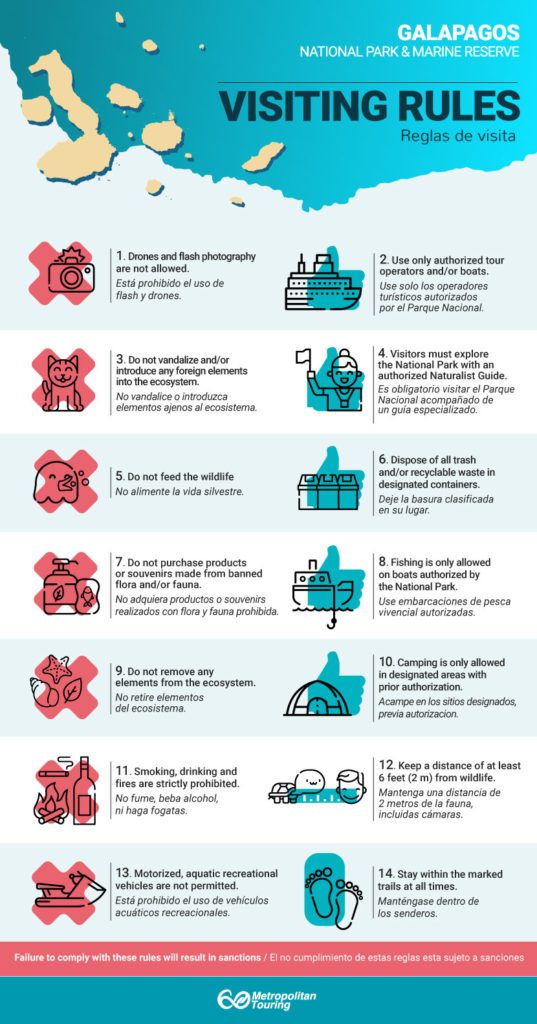
What are the Galapagos National Park Rules?
1. Drones and flash photography are not allowed in Galapagos National Park
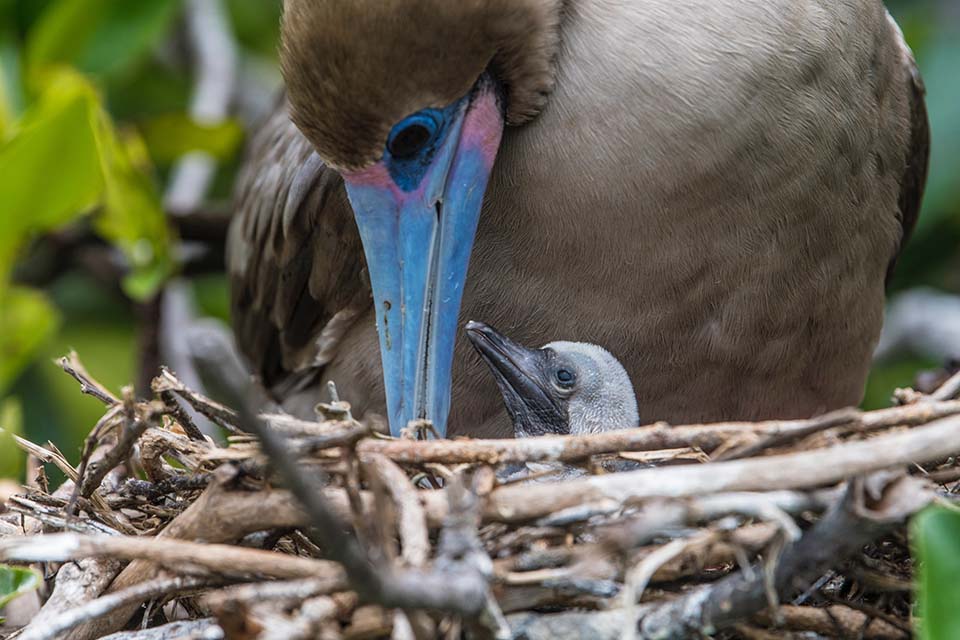
The archipelago’s sun-kissed shores will provide you with all the natural light you need to take the best vacation photos. As a result, there’s no need to use your camera flash when snapping shots of your surroundings! Remember that the less we disturb the fauna, the better. What’s more? Flash photography might even disturb the wildlife, causing it to leave its nest or react to the annoyance. Drones are also another photo-taking element that are not allowed according to the Galapagos National Park Rules!
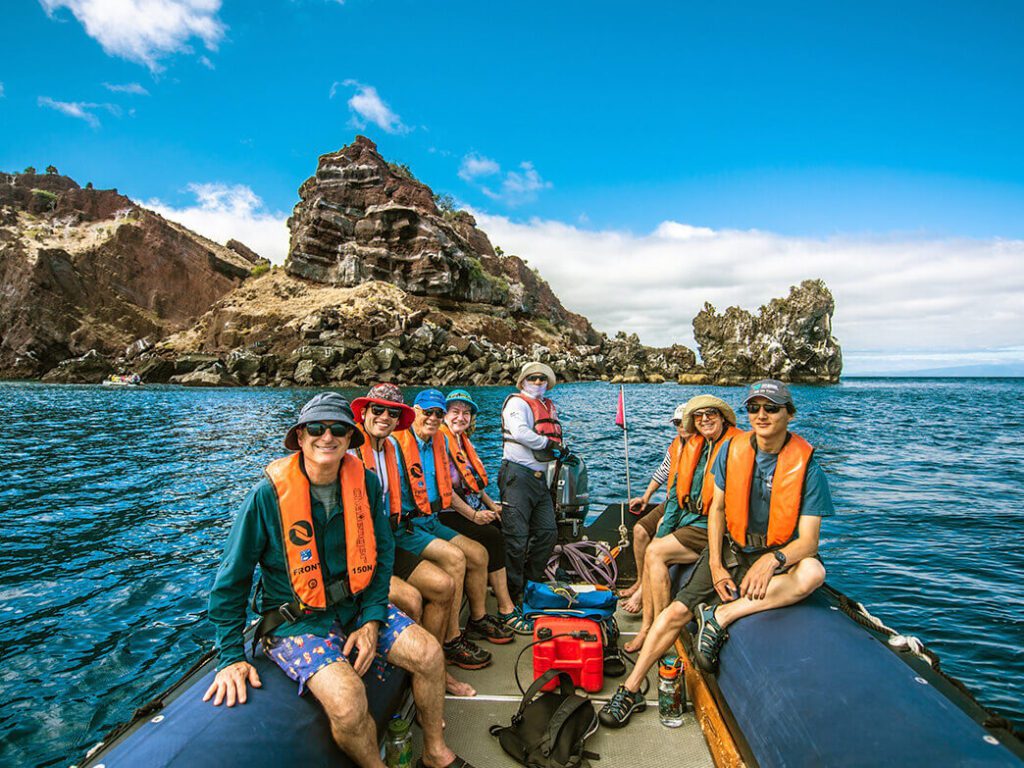
2. Use only authorized tour operators and/or boats certified for operations in the Galapagos National Park.
There’s a saying in the Galapagos Islands, and it goes something like this: when in doubt, choose only authorized tour operators or boats. Pretty simple, huh? This is a really important rule because your tour operator will be responsible for your safety throughout your whole trip as well as the conservation of each and every fragile site you visit in the archipelago! Also: your guide must be authorized by the Galapagos National Park Directorate.
3. Do not introduce any foreign elements to the ecosystem
The Galapagos National Park ecosystem is highly susceptible to external influences. Consequently, the introduction of foreign elements is strictly forbidden! According to the Charles Darwin Foundation & Research Center, there are 1,476 introduced species currently living on the islands; some of which have brought devastating consequences for local fauna and flora. For example, goats – animals that are notorious for eating every single plant they encounter– are responsible for the extinction of 5 local species of vegetation alone!
4. Visitors must explore the Galapagos National Park with an authorized Naturalist Guide
A great guide guarantees a great experience, that’s why all park visitors must be accompanied by authorized naturalist guides. This provides an opportunity for guests to become a part of the archipelago experience in a safe and informed way while complying with the Galapagos National Park Rules.
5. Do not feed the wildlife
Picture this: you’re chilling at home and your guests start throwing food at your face. Not cool, right? Well, that’s exactly how the animals feel when you feed them in the Galapagos Islands! No matter how “hungry” a penguin or a turtle might look, it is absolutely forbidden to feed them! The intake of foreign food may have devastating consequences for the health and natural habits of Galapagos native fauna.
6. Dispose of all trash and/or recyclable waste in the designated containers
This one is pretty simple. According to the Galapagos National Park Rules, disposing garbage in the wrong container or just plain throwing it around on the ground is out of the question. You might not be able to see it immediately, but it interferes tremendously with the way the ecosystem in the archipelago works.
7. Do not purchase products or souvenirs made from flora or fauna
In economy, there’s the law of supply and demand. If you keep buying a specific object, the retailer will most likely keep producing it to satisfy your needs. If there’s no demand, the production of any product ceases to happen, and that’s exactly what authorities are trying to do with souvenirs made out of banned pieces of fauna or flora in Galapagos! You can help them achieve this goal by buying responsibly and reporting any sightings of these illegal objects/souvenirs.
8. Fishing is only allowed on boats authorized by the Galapagos National Park
Fishing is not completely forbidden by the Galapagos National Park Rules, but be aware that if you plan on doing so, you can only do it aboard boats that have been authorized by the National Park. People aboard these boats know exactly where, when and what you can fish without getting into big trouble and/or potentially harming the delicate creatures underwater.
9. Do not remove any elements from the ecosystem
You can get the best memories out of your Galapagos cruises without taking anything from the islands! Remember: removing things from the ecosystem, no matter how small, may damage and/or destabilize entire ecosystems. Everything that belongs to Galapagos, must stay in Galapagos!
10. Camping is only allowed in designated areas with prior authorization
If camping is your ultimate passion, try doing it in the archipelago: it’s sure to be a once-in-a-lifetime opportunity! Just make sure you get prior authorization from the Galapagos National Park Directorate first. You’ll have to select a camping-approved site and request permission to stay there at least 48 hours in advance. Easy peasy!
11. Smoking, drinking and fires are strictly prohibited
This one is really important. Fire, in any form – be it campfires, cigarette butts, etc. – can cause potentially catastrophic wildfires, endangering not only the parks flora and fauna but other guests and yourself.
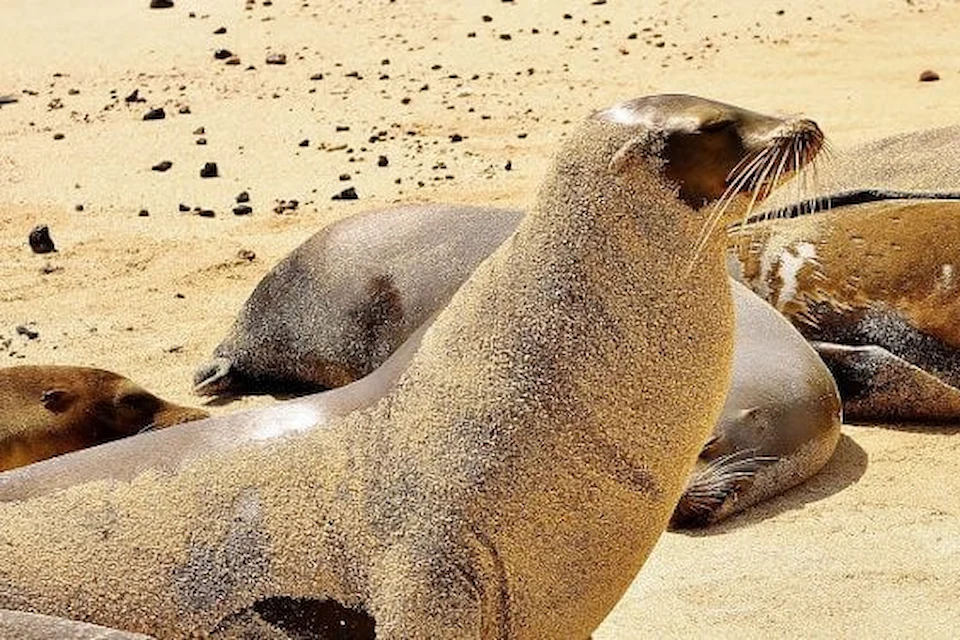
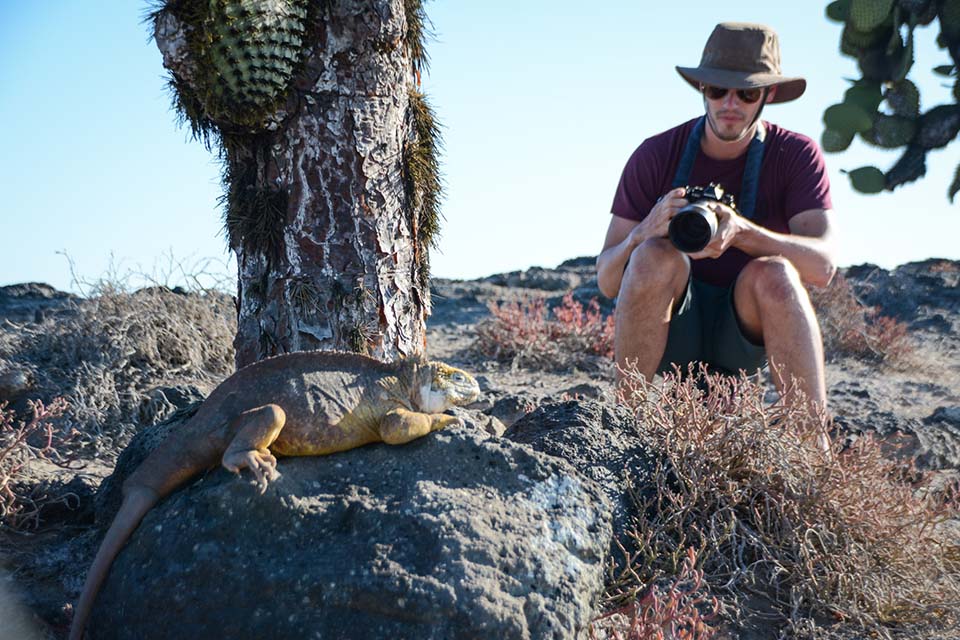
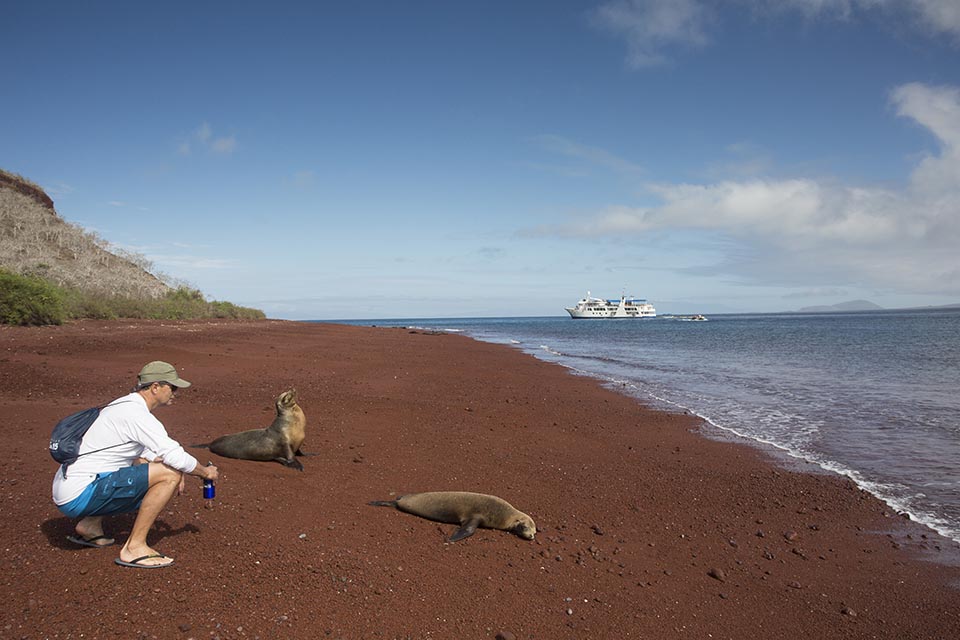
12. Keep a distance of at least 6 feet (2 meters) from the wildlife
When encountering some of the Galapagos’ most majestic creatures, always make sure that you and your camera remain at least six feet away (two meters) from each other. This is the only way to guarantee both your safety and the animals’ wellbeing. The relationship between the archipelago’s fauna and visitors will most likely make you smile. Animals are not fearful of human contact, yet the only way of keeping it that way is by respecting their personal space!
13. Motorized, aquatic recreational vehicles are not allowed
Snorkeling or swimming in the archipelago is amazing. Its clear waters are the perfect place to get to know and see some of the things that Charles Darwin himself was so amazed by. For example, you can read this Condé Nast Traveller article with amazing photos of the animals you’ll get to encounter while doing these activities. As a result of just how beautiful and delicate the underwater environment is, you’ll find that motorized water sports throughout the islands are a big no-no. These types of vehicles may scare the animals away or, even worse – harm them.
Javier Garcia
Eduardo Silva

Carolina Escobar
Javier Garcia
Eduardo Silva
Carolina Escobar
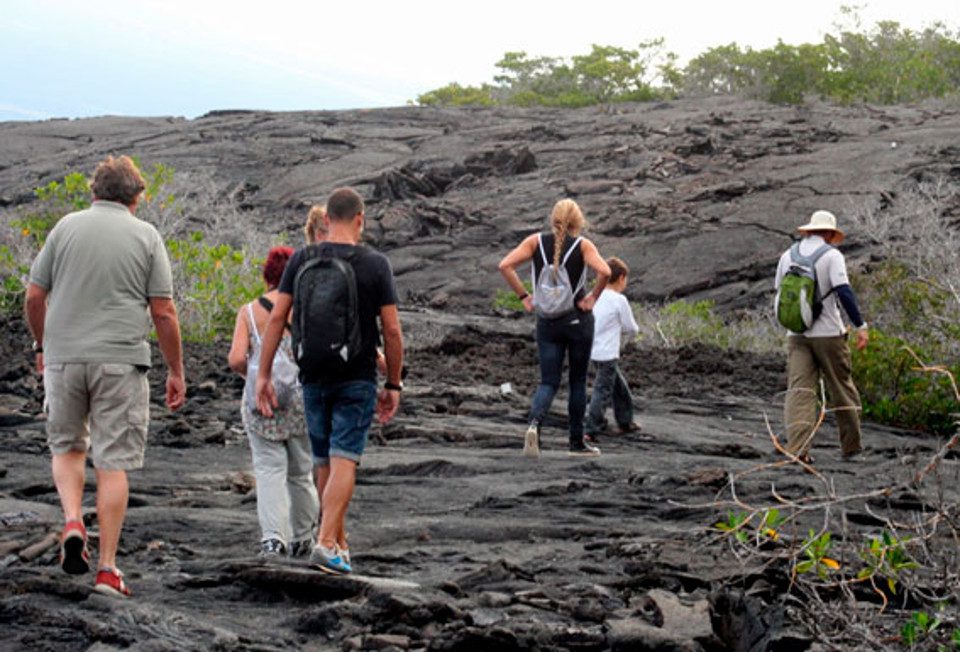
14. Stay within the marked trails at all times
Safety comes first! For this reason, we kindly ask that you always stay within the designated path. Our certified guides will do their best to keep you safe at all times, but they certainly can’t do it if you are wandering around the park!
In the end, these rules don’t appear out of nowhere: they’re meant to keep things working properly for everyone and everything on the islands. If you follow these guidelines, we guarantee that you will not only have the time of your life in the Galapagos Islands, but you will contribute to the preservation of this natural jewel and all of its inhabitants, plants, animals and people alike!
And we’re counting on you to make it so! Curious to find out more about the Enchanted Isles? Be sure to click here for more Galapagos Information!