Skip to content
How can you distinguish between two creatures that share the same appearance? Is the animal below a sea lion or a Galapagos fur seal? What distinguishes a sea lion from a Galapagos fur seal? A lot of visitors to the Galapagos Islands mix up the two species: Although the two species have many anatomical characteristics and are classified as pinnipeds, or “fin-like foot,” your best chance at distinguishing between a fur seal and a sea lion will need to be based on differences in appearance, behavior, and range.
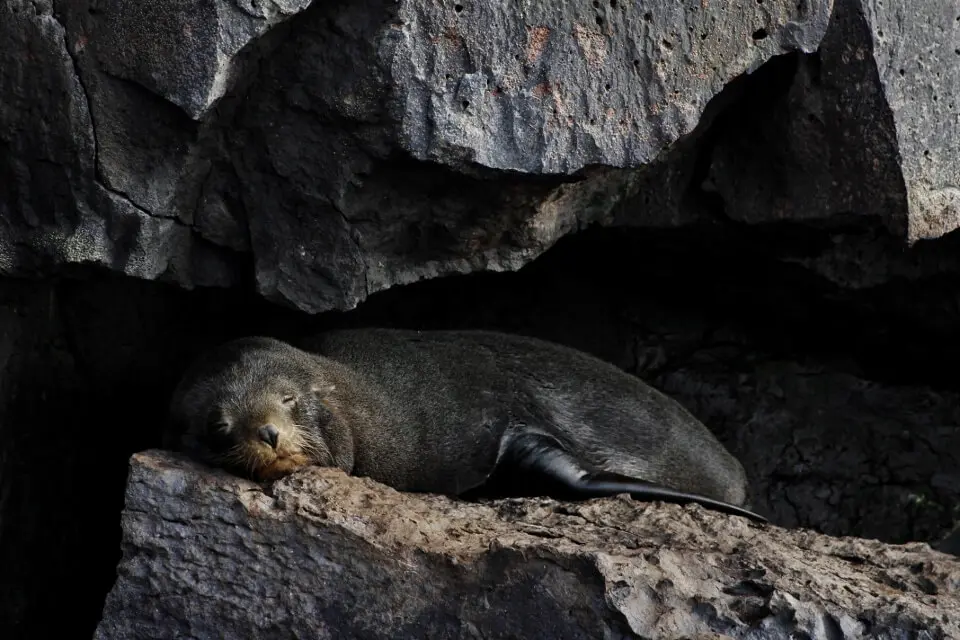
Compared to sea lions, fur seals have thicker coats and shorter snouts. Additionally, and in contrast to sea lions (who are usually found relaxing on sunny beaches), fur seals also prefer rocky coastlines and shady locations. What’s more? Most of the Galapagos fur seal populations reside on Isabela and Fernandina islands, although the distribution of Galapagos sea lions is more significant throughout the archipelago’s islands.
Visitors frequently spot these well-known creatures during the Galapagos cruises offered by Yacht Isabela II!
Description: Sea Lion or Galapagos fur seal?
Arctocephalus galapagoensis is the official scientific name for the Galapagos fur seal. Arctocephalus, the genus name for all fur seals, means “bear head” in direct translation, which is a fitting analogy for these shaggy marine mammals. This animal has a short, pointed muzzle resembling that of a bear.
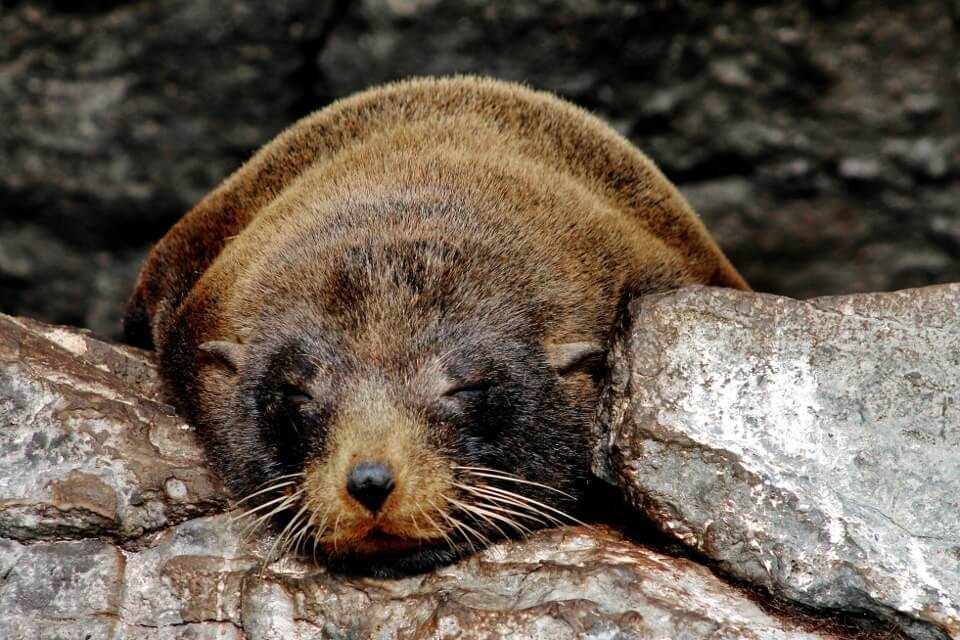
In contrast, sea lions have longer snouts and eyes located further back on their heads.
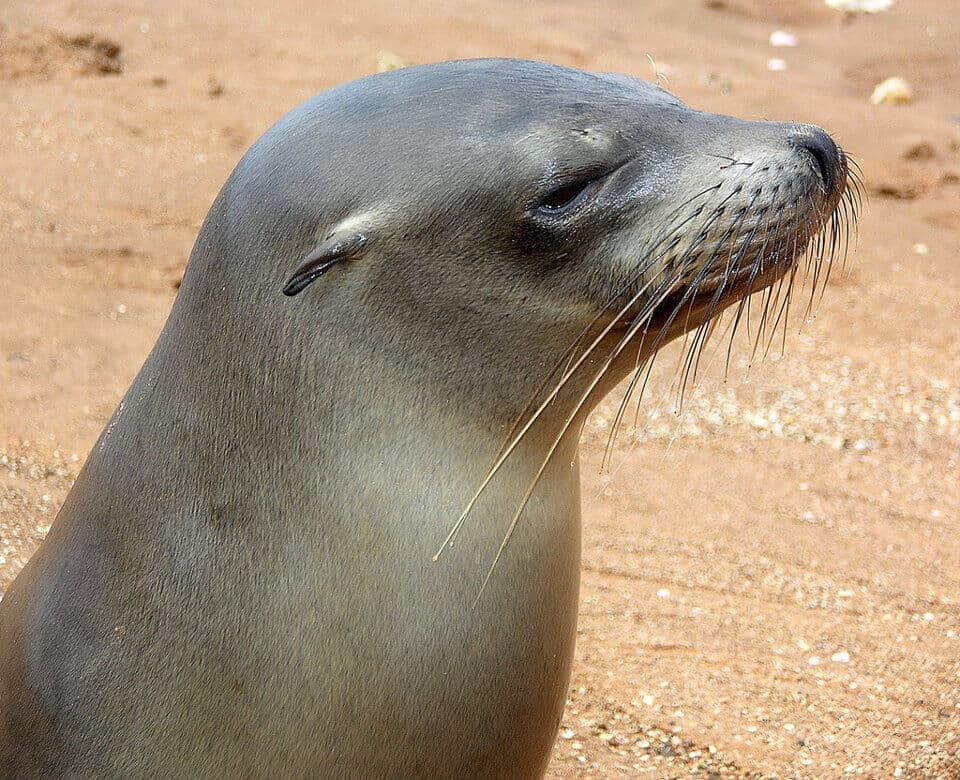
The size of the two creatures is often the most striking differentiator. Despite being the smallest species of sea lion, Galapagos sea lions are still significantly larger than fur seals. Males can weigh up to 440 pounds (200 kg), while females average around 165 pounds (75 kg). In contrast, fur seals—the smallest pinnipeds—typically weigh between 66 and 176 pounds (30–80 kg).
Both fur seals and sea lions belong to the Otariidae family—commonly known as “eared seals” due to their visible external ears, unlike “true seals,” which lack them. However, despite this shared trait, different genera within Otariidae have evolved unique ear shapes. This distinction helps differentiate fur seals from sea lions: fur seals have ear flaps that stick out more prominently, while sea lions have flatter ear flaps that sit closer to the head. The Galapagos sea lion (Zalophus wollebaeki) in particular is in fact more closely related to the California sea lion than to other pinnipeds.
What distinguishes a Sea Lion from a Fur Seal when it comes to behavior and distribution?
Galapagos fur seals like to rest are in the shade, usually near rocky shorelines. Because of this, even if the population of the two animals are equal, it is more challenging for tourists visiting the islands to witness the smaller fur seals. Moreover, fur seals exhibit more excellent habitat selectivity, preferring the stony western shores of the islands of Isabela and Fernandina.
In contrast, sea lions can be frequently seen around the islands on piers and beaches. That’s right! Sea lions are just about everywhere in the Galapagos Islands; and if you’re not careful, you might even step on one as you’re walking around Puerto Ayora or Puerto Baquerizo Moreno!
Sea lions feed nearly all day, but fur seals feed at night, which is another significant distinction between the two species. Due to nocturnal eating habits, fur seals are closely linked to moon cycles. According to studies, fur seals eat much more during the new moon than the full moon. This could be because hiding from predators is easier when there’s less moonlight.
Source: bushytrips YT channel
If you’re still struggling to distinguish between sea lions and fur seals, don’t worry! You can follow your Galapagos naturalist guide’s tips and directions to make the identification process that much easier! The best thing, though? On all of our tours, sea lions will be visible. So, just be sure to verify that your itinerary includes the necessary island coverage to increase your chances of spotting the distinctive Galapagos fur seal, too! You can do this by simply consulting our convenient Galapagos BIG15 guide!

Melissa Altamirano
Eduardo Silva

Carolina Escobar
Melissa Altamirano
Eduardo Silva
Carolina Escobar