 Skip to content
 Discover Lima, Peru, where vibrant culture, rich history, and a world-renowned culinary scene come together to offer an unforgettable adventure for every traveler.
Lima is a city of striking contrasts where colonial heritage meets modern sophistication, and Pacific sunsets fall seamlessly behind pre-Columbian temples. As the capital of Peru, this vibrant metropolis serves as the nation’s political, cultural, and culinary center. For many travelers arriving on international flights to Lima, Peru, the city becomes the gateway to world-renowned destinations such as Cusco, the Sacred Valley, and Machu Picchu.
Whether you are planning a cultural journey, a culinary tour, or a multi-region experience, Lima offers depth, diversity, and world-class experiences. This comprehensive guide to Lima, Peru covers geography, climate, transportation, history, attractions, cuisine, and curated travel programs departing from the city.
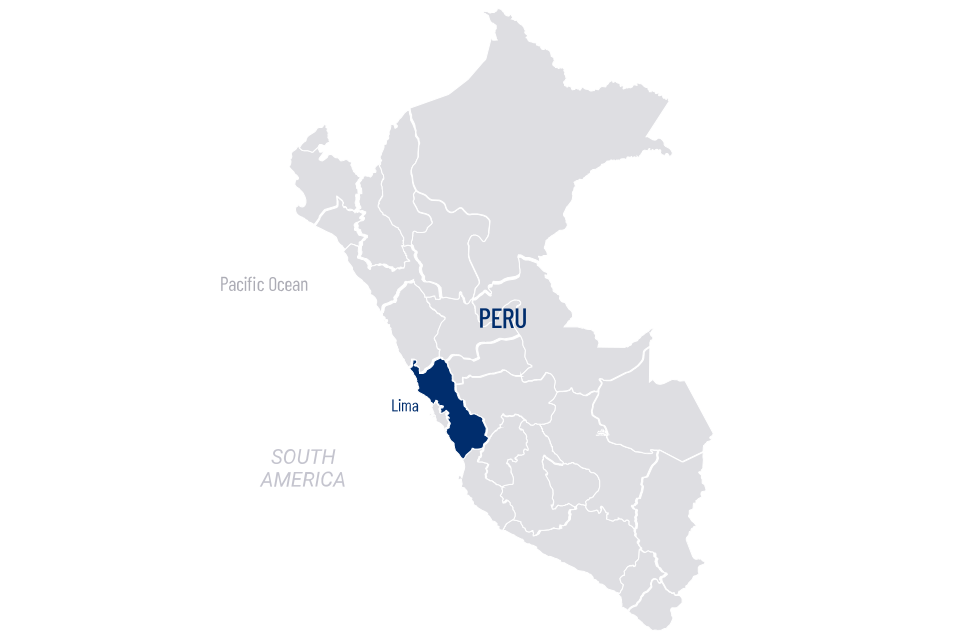
If you’re wondering where Lima is located, the city is situated on the central Pacific coast of South America. Lima, Peru stretches along dramatic coastal cliffs overlooking the ocean, bordered by striking desert landscapes and fertile river valleys.
Lima’s elevation averages approximately 154 meters (505 feet) above sea level, although many districts lie directly along the coastline. The city mainly developed between the valleys of the Chillón, Rímac, and Lurín rivers, which historically supported early civilizations in the region.
Strategically positioned between the Andes Mountains and the Pacific Ocean, Lima serves as Peru’s main transportation hub. From Lima, travelers can head south toward Ica and Paracas, north toward Trujillo, or inland toward the highlands and the Amazon basin. The location of Lima, Peru makes it the ideal starting point for discovering the country’s geographic and cultural diversity.
Understanding Lima weather is essential when planning your visit. Lima has a mild desert climate, meaning it receives very little rainfall and maintains moderate temperatures throughout the year.
During the summer months (December to April), Lima’s weather is warm and sunny, with temperatures ranging from 25°C to 30°C (77°F to 86°F). This is the best time to enjoy ocean views, outdoor cafés, and coastal activities in districts like Miraflores and Barranco.
From May to November, Lima experiences cooler temperatures and a light coastal mist known locally as garúa. While skies may be overcast, its cultural attractions, museums, and renowned restaurants remain fully accessible. Thanks to its stable climate, Lima is a year-round destination that does not experience extreme seasonal changes.

Most international visitors arrive at Jorge Chávez International Airport, which is Lima’s airport, located in the Callao district. As the largest airport in the country, it connects Lima, Peru with major cities across North America, Europe, and Latin America.
There are multiple direct and connecting flights to Lima, Peru, making it one of the most accessible capitals in South America. From the airport, central neighborhoods such as Miraflores and San Isidro are reachable within 45 to 60 minutes.
Domestic flights operate daily from Lima to major destinations. The most popular route is from Lima to Cusco, which takes approximately 1 hour and 20 minutes. Travelers continuing from Lima to Machu Picchu typically fly to Cusco and then travel by train or guided trek to reach the historic citadel. With its extensive connectivity, Lima functions as Peru’s primary travel gateway.
Founded in 1535 by Francisco Pizarro, Lima quickly became the administrative center of Spanish South America. Originally called the “City of Kings,” the city grew into one of the most important colonial capitals in the Americas.
However, the history of Lima, Peru extends far beyond the colonial era. Pre-Inca civilizations inhabited the region thousands of years earlier, building ceremonial temples and irrigation systems. Archaeological remains found throughout Lima reveal this deep cultural legacy.
During the colonial period, Lima flourished economically and architecturally. Churches, monasteries, and mansions from this era still stand in the UNESCO-listed historic center. Today, Lima preserves its rich, layered history while embracing modern development, making it one of the most culturally rich cities in South America.

There are countless things to do in Lima, Peru, whether you are interested in culture, history, outdoor recreation, or cuisine. The city offers a unique blend of colonial landmarks, contemporary art, coastal scenery, and vibrant nightlife.
Among the top things to do in Lima, Peru are exploring the historic center, visiting museums, walking along the Pacific cliffs, enjoying world-renowned, cutting-edge cuisine, and discovering traditional markets. Each district of Lima provides a different perspective on the city’s identity.
From sunrise ocean views to evening cultural performances, Lima offers experiences that appeal to every type of traveler.

One of the most important cultural institutions in Lima is the Larco Museum. Housed in an 18th-century mansion built over a pre-Columbian pyramid, it contains an extraordinary collection of ancient Peruvian artifacts.
Visitors to this museum in Lima can explore over 5,000 years of history through ceramics, gold pieces, textiles, and ceremonial objects. The museum provides essential context for understanding the civilizations that shaped Lima, Peru.
A visit to the Larco Museum is a highlight for anyone seeking historical depth during their stay in Lima.

Surfing is a popular activity in coastal Lima. The district of Miraflores in Lima, Peru is famous for its scenic cliffs and reliable waves.
Both beginners and experienced surfers can take lessons or rent boards along the shoreline. Even if you prefer not to surf, walking along the boardwalk in Lima provides breathtaking views of the Pacific Ocean and the city skyline.
Outdoor activities along the coast are among the most memorable experiences in Lima.

The Plaza de Armas marks the birthplace of Lima and remains its historic heart. Surrounded by the Cathedral, Government Palace, and dozens of ornate balconies, the square represents centuries of political and religious significance.
Exploring the historic center of Lima offers insight into the colonial foundations of the city. Walking tours provide detailed narratives about how Lima, Peru evolved from a Spanish stronghold into a modern capital.
This central plaza remains one of the most iconic landmarks in Lima.
Lima is internationally recognized as the cuisine capital of Latin America. Its mouthwatering dishes blend Indigenous traditions with Spanish, African, Chinese, and Japanese influences.
Dining in Lima ranges from casual cevicherías to award-winning fine-dining restaurants. Signature dishes such as ceviche, lomo saltado, and tiradito showcase the diversity of ingredients found throughout Peru.
Food experiences in Lima include market visits, pisco tastings, and chef-led tasting menus. Culinary exploration is essential to understanding the cultural identity of Lima, Peru.

Located just south of Lima, the archaeological complex of Pachacamac is one of Peru’s most important ancient pilgrimage centers.
The site contains temples and pyramids built by successive civilizations long before the Spanish arrival. Visiting Pachacamac allows travelers to understand the spiritual history connected to Lima and the surrounding region.
This desert sanctuary adds another historical dimension to any visit to Lima.
The culinary reputation of Lima is built on biodiversity and innovation. Markets across Lima offer fresh seafood, native potatoes, tropical fruits, and Andean grains.
Chefs in Lima, Peru have earned international acclaim for elevating traditional dishes into contemporary culinary art. The fusion of flavors reflects centuries of migration and cultural exchange.
For many visitors, the cuisine becomes the highlight of their time in Lima, only adding to the city’s allure as a global culinary capital.

Lima is located on Peru’s central Pacific coast and serves as the capital of the country. It is positioned between the Andes Mountains and the ocean, making it a strategic gateway to multiple regions.
Visitors can explore colonial architecture, museums, coastal parks, archaeological sites, and culinary hotspots. The variety of experiences makes Lima one of South America’s most dynamic cities.
Lima is famous for its cuisine, colonial architecture, ocean views, and its cultural heritage. It consistently ranks among the world’s leading food destinations.
Spanish is the primary language spoken in Lima, though English is widely understood in tourism areas.
The most efficient route from Lima to Machu Picchu is flying to Cusco and continuing by train or guided trek. This journey connects Peru’s coastal capital with its most iconic archaeological site.
Questions? Need help deciding?
Have a chat with our Destination Experts that have enjoyed our Peru itineraries!

We'll call you back within 5 minutes.
