Skip to content
Only a very particular type of cruise ship is permitted to operate in the Galapagos Islands. Under the regulations established by the Galapagos National Park Authority, these special expedition vessels must meet strict environmental, operational, and size requirements to navigate within Galapagos waters. These rules also explicitly prohibit traditional large-scale cruise ships (also known as ocean liners) from entering Galapagos waters by virtue of the fact that they are simply way too large to operate sustainably within the archipelago. As a result, these large-scale, ocean liner cruise ships are classified as unauthorized vessels and are forbidden from entering Galapagos waters.
Instead, the only ships allowed to operate in the Galapagos are significantly smaller cruise ships, otherwise known as expedition vessels. Within this class of vessels, visitors keen on exploring the Enchanted Isles will have the chance to choose from small, medium, and large expedition cruises. But don’t be alarmed: By “large” here we’re talking about a maximum capacity of 100 passengers! Additionally, authorized expedition vessels must comply with the National Park’s regulations, which are designed to minimize environmental impact while allowing in-depth access to the islands.
In this blog, we’ll explore the crucial differences between traditional ocean liner cruises and Galapagos expedition cruises, dispelling as many myths as we can along the way!

Ocean Liner Cruise Ships: High-density Floating Leviathans
Modern-day cruise ships differ greatly from their early predecessors. Today, a single large cruise ship can carry over 7,000 passengers and is designed to function as a high-density and fully self-contained environment. These vessels typically include a wide range of onboard amenities, such as casinos, fitness centers, spas, cinemas, theaters for live performances, swimming pools, hot tubs, libraries, nightclubs, and numerous restaurants and bars. Due to their scale and infrastructure, large cruise ships are often described as floating cities rather than traditional seafaring vessels.
Beyond their size, what fundamentally characterizes large cruise ships is their self-contained operational model. The experience they offer is often designed to take place primarily onboard, with most services, entertainment, and activities concentrated on the ship itself. When educational programming or informational lectures are offered, they are usually positioned as optional enrichment activities rather than a central focus of the voyage. Such programs form only a small fraction of a broader entertainment-driven experience, where learning is one component among a multitude of other options (rather than the primary purpose of the journey).
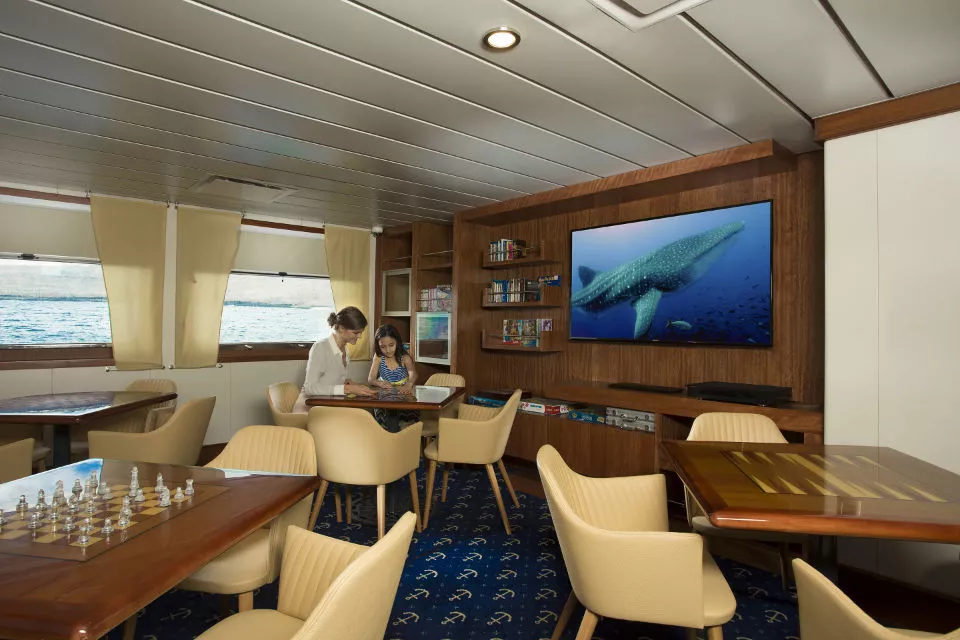
Expedition Vessels: A Focus on Size, Guides, and the Destination Itself
Expedition vessels operating in the Galapagos Islands are purpose-built ships designed specifically for nature-focused exploration in regulated environments. While they still provide a high level of comfort, their design priorities differ fundamentally from those of conventional large cruise ships. Think of it this way: The overall experience is shaped less by onboard entertainment and more by in-depth access to the destination itself that’s complemented by guided expertise throughout each excursion.
Firstly, there’s just a small note on size we’d like to make. In the Galapagos, expedition vessels are limited to a maximum capacity of 100 passengers. While this makes them significantly smaller than ocean liner cruise ships, there’s an even more meaningful distinction to be revealed in the concept of passenger space ratio (PSR). PSR refers to the amount of cruise space available per passenger. A higher PSR number signifies: Less of a crowded feeling onboard, more efficient and tranquil mobility throughout the ship, quieter communal areas, and smoother logistics during disembarking and wildlife encounters.
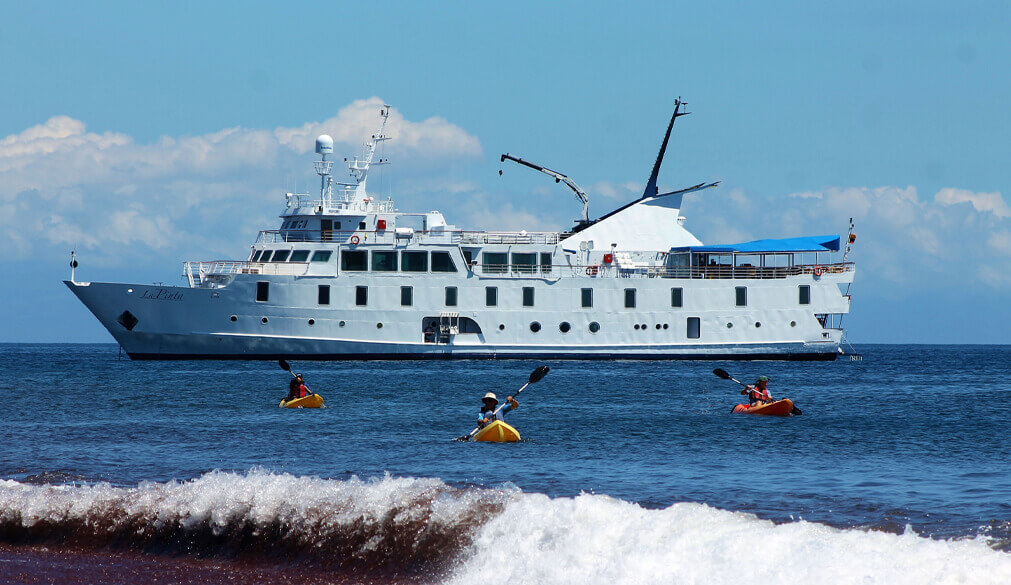
Large ocean liner cruise ships typically have a PSR that hovers around 20. Even on the newest vessels, space is distributed across thousands of guests, resulting in high passenger density in shared areas. By contrast, and depending on the vessel’s class and capacity, expedition vessels operating in the Galapagos Islands commonly offer PSR values upwards of 30 or more! It is this underlying spatial ratio, rather than absolute ship size, that enables expedition vessels to offer its guests even greater comfort, a lower environmental impact, and a fundamentally different relationship to the destination itself.
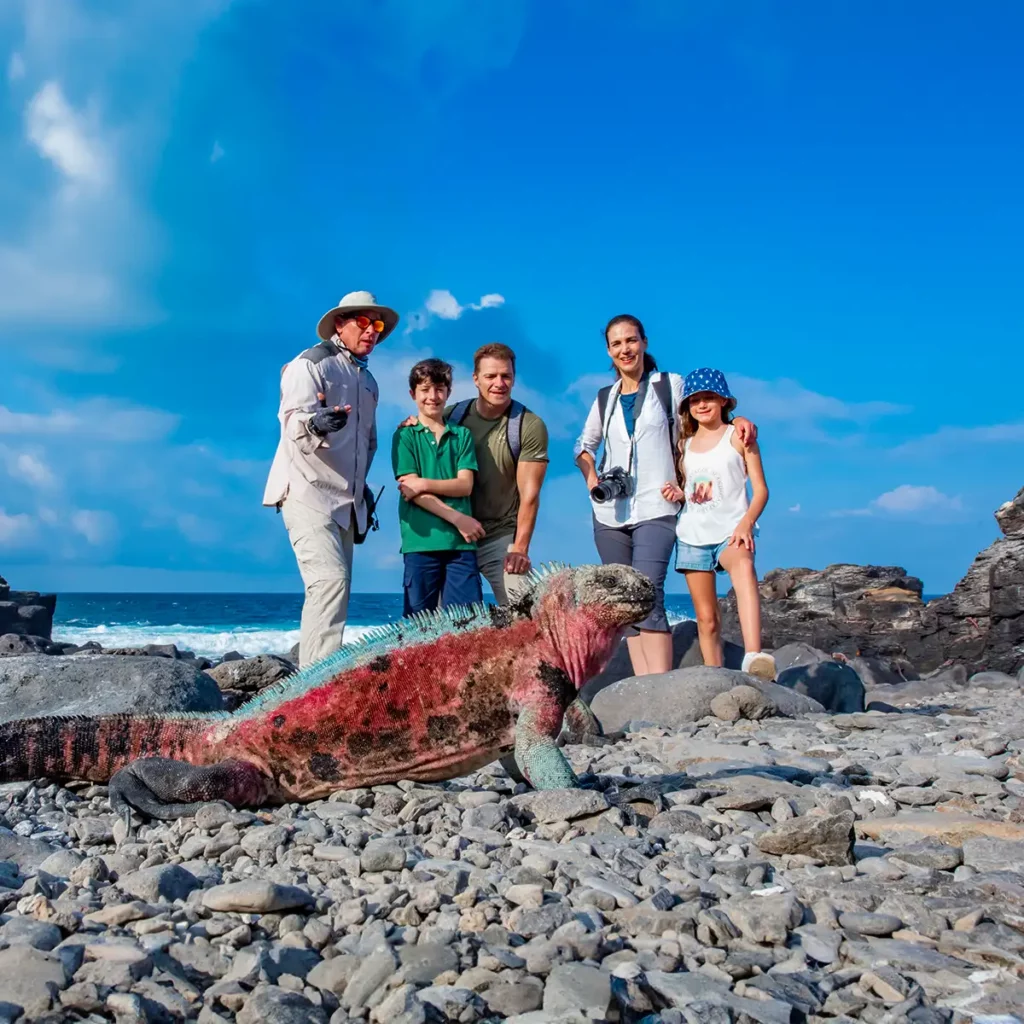
Secondly, the involvement of naturalist guides throughout the expedition is another huge distinguishing feature. Guides accompany guests through each and every excursion and even continue the experience onboard by offering lectures, briefings, and informal discussions. On some voyages, guest lecturers also join the journey to expand on additional topics such as wildlife, geology, ecology, and regional history. The purpose of this approach is to help guests understand what they are seeing before, during, and after each visit, so exploration and learning progress together rather than as separate activities.
Lastly, expedition vessels are designed around a destination-first itinerary. On Galapagos routes, guests typically spend the majority of daylight hours off the ship, visiting designated sites and observing wildlife in natural settings. Daily excursions, interspersed with meals and rest periods, often total six to eight hours outside the vessel. The ship functions primarily as a mobile base rather than the central focus of the experience. Access to shore sites is facilitated by small boats known as skiffs or dinghies, locally referred to as pangas in the Galapagos.
Operational Sustainability on Expedition Ships
In environmental terms, expedition vessels in the Galapagos are also distinguished by the systems and operational standards built directly into their design and daily operation. Many ships incorporate onboard treatment plants capable of processing both graywater and blackwater before discharge, helping ensure that wastewater is handled responsibly while navigating within the archipelago. Waste management is similarly structured, with specific plans and technologies in place to manage kitchen waste in accordance with MARPOL guidelines, which classify and regulate food-related waste generated onboard. These measures are intended to limit the environmental footprint of daily ship operations while traveling through a highly protected marine reserve.
Additional equipment and operational practices also contribute to this sustainability framework. Auxiliary outboard motors are often four-stroke engines fitted with propeller guards, which improve safety while reducing potential disturbance to marine life in shallow waters or during landings. Some expedition operations also offset their emissions in order to maintain carbon-neutral operations. Together, these technical and operational features reflect an approach to navigation that prioritizes environmental safeguards alongside exploration, aligning vessel operations with the conservation priorities that define tourism in the Galapagos.
Choosing the Right Cruise Experience
Choosing between an ocean liner cruise and an expedition vessel ultimately comes down to how travelers want to experience their journey at sea. Ocean liner cruises are designed around onboard amenities and entertainment, offering a self-contained experience where the ship itself is a central part of the voyage. Expedition cruises, by contrast, offer a more direct, informed, and place-centered way to experience the journey, shaped by proximity to nature and guided explorations that deepen one’s understanding of the environments being visited.