If you’re the kind of traveler who’s already checked Machu Picchu off the list, or you’re simply craving something beyond the usual stops like Lima or Cusco, then it’s time to uncover a wholly different side of the country. The following hidden gems in Peru offer a deeper, more off-the-beaten-path experience that can range anywhere from cloud forest citadels and desert oases to ancient cities, waterfalls, and thermal springs. Here’s your guide to the places that few tourists reach, but all those who do definitely end up raving about.
1. Kuelap: The Lost Citadel
Ideal for: Adventurous travelers, history buffs, and anyone who’s already been to Machu Picchu and wants to seriously level up their Peru street cred.
Highlights at a Glance
- Regarded as a “fortress in the clouds” built by the Chachapoyas or “cloud warriors” in the 6th century. Kuelap is a pre-Inca marvel that makes even Machu Picchu glance nervously over its shoulder.
- Massive circular stone homes (over 400 of them), guarded by towering walls up to 66 feet (20 meters) high.
- Access via a dramatic 20-minute cable car ride, delivering you right into the misty cloud forest with jaw-dropping valley views.
Overview
Once a thriving city of about 3,000 inhabitants, Kuelap stands proudly at 9,840 feet (3,000 meters) above sea level. Its enormous walls and mysterious stonework hint at a deeply spiritual society, with decorative friezes of serpents and felines that still spark debate among archaeologists. After a period of restoration following a partial wall collapse, Kuelap reopened and made this hidden gem in Peru available to visitors in 2023 with more controlled access to preserve its fragile beauty.
Travel Tips
- Getting there: Fly into Chachapoyas, then it’s a one-hour drive to Nuevo Tingo. From there, hop on the cable car and either hike or ride a short horse trek to the fortress.
- Book ahead: Entry is limited to small daily groups, so advanced reservations are strongly recommended.
- Best time to visit: May to September for clear skies and dry weather. Rainy season (October to April) adds misty, atmospheric vibes and raging waterfalls nearby.
- What to bring: A small and lightweight daypack, good walking shoes, water, layers for chilly mountain air, and sun protection.
- Hire a local guide: They bring Kuelap’s history and mythology to life, turning stone walls into fascinating stories.
For those exploring the less-traveled regions featured in our Places to Visit in Peru guide, Gocta is a must.

2. Caral: The Oldest City in the Americas
Ideal for: History lovers, archaeology buffs, and travelers seeking ancient mysteries off the beaten path. Bonus points if you want to brag about the fact that you’ve walked through the birthplace of American civilization and one of the more unique places to visit in Peru!
Highlights at a Glance
- Regarded as the “Mother of Andean civilizations.” Caral is roughly 5,000 years old, which means it’s older than the Olmecs and a contemporary of ancient Egypt and Mesopotamia.
- A sprawling UNESCO site covering roughly 1,548 acres (626 hectares) featuring monumental stone pyramids, sunken circular plazas, and residential zones that once accommodated around 3,000 people.
- Exceptionally well preserved: Massive platform mounds, communal plazas, and even ancient flutes hint at music-filled ceremonies.
Overview
Nestled on a dry desert terrace overlooking the green Supe Valley about 1,150 ft (350 m) above sea level, Caral stands as the oldest known city in the Americas. Flourishing between approximately 2600 and 2000 BC, this desert metropolis showcases advanced urban planning that was developed centuries before the Inca. Its lack of ceramics and rich use of cotton textiles, along with maritime-based trade and agriculture, point to a distinctly peaceful, spiritually-driven society that valued architecture, music, and ritual over conquest.
Travel Tips
- Getting there: Located about 120 miles (190 km) north of Lima and 15 miles (23 km) from the coast, Caral is easily reached via a day tour or independent bus ride. Road from Supe to Caral is rough but scenic.
- Entry & Tours: Open 09:00–16:00 daily; guided tour (in Spanish) is mandatory, which is included in a modest entry fee (~15 Peruvian soles/~$4 US dollars).
- Best time to visit: Year-round access in coastal desert climate. Expect mild mornings and sunny afternoons. Go early to beat any afternoon haze or heat.
- What to bring: Sunhat, sunscreen, water, and sturdy shoes for walking on uneven terrain. Light layers are recommended.
- Insight: Official guides explain the circular plazas, musical instruments, and quipu-like textiles, which are all vital for understanding the spiritual and social structure of this ancient civilization.

3. Huacachina: The Desert Oasis
Ideal for: Adventure seekers, sunset chasers, and travelers looking for a quirky oasis break that lies between Peru’s coastal and desert highlights.
Highlights at a Glance
- South America’s only natural desert oasis, a vivid green lagoon surrounded by towering golden dunes.
- A popular hub for dune buggy rides, sandboarding, sunset hikes, and pedal-boating.
Overview
This tiny village of about 100 permanent residents, now buzzing with travelers, sits in a bowl of sand dunes about 3 miles (5 kilometers) from the city of Ica. Year-round sun and heat make it perfect for adventure and relaxation alike. Originally a local spa retreat with rumored medicinal waters, Huacachina has evolved into a playground for backpackers and thrill-seekers, while still holding onto its one-of-a-kind desert charm, especially at golden hour. Despite its increase in popularity, Huacachina still shines bright as one of several hidden gems in Peru.
Travel Tips
- Getting there: About 4 to 5 hours by bus or car from Lima. Plenty of day tours and multi-day tour options link Huacachina with other nearby attractions.
- Top activities: Book a dune buggy and sandboarding combo around sunset. For a slower pace, rent a pedal boat on the lagoon or hike up the dunes for incredible views.
- Stay safe & hydrated: Bring cash (the one ATM can be somewhat unreliable), sunscreen, plenty of water, and sunglasses.
- Best time to visit: Year-round desert sun is present, but late afternoon is perfect for catching the spectacular sunset and avoiding the hottest parts of the day.
- Insider tip: Nearby Ica has fantastic wineries and pisco distilleries for tastings and tours.

4. The Gocta Waterfall: A Towering Wonder in the Clouds
Ideal for: Nature lovers, adventure seekers, waterfall chasers, and anyone craving a dramatic trek through cloud forest to one of the world’s tallest hidden cascades.
Highlights at a Glance
- At approximately 2,530 feet (771 meters), Gocta is among the highest free-leaping waterfalls globally. It stands at either 3rd or 18th tallest, depending on whether or not you count the two steps.
- Two-tier cascade: A first drop of ~1,772 feet (540 meters) and a second drop of ~754 feet (230 meters).
- Surrounded by lush Andean cloud forest, with plenty of wildlife sightings (birds, orchids, monkeys) and a steep, varied trail that rewards physical effort with epic views.
Overview
Tucked into northern Peru’s Amazonas region near Chachapoyas, the Gocta Waterfall consists of two dramatic, stepped cascades that flow downwards through a verdant cloud forest. Though locals knew of the waterfall for centuries, fearsome legends in the form of a serpent-guarded mermaid kept outsiders away, up until a German expedition brought into the global spotlight in the early 2000’s. Today, the Gocta Waterfall stands as a breathtaking piece of immaculate wilderness and one of the biggest hidden gems in Peru.
Travel Tips
- Getting there: Reach Chachapoyas (flight via Jaen or overnight bus), then head 40–60 minutes to Cocachimba or San Pablo via colectivo or moto‑taxi. Entry ticket and guide needed.
- Trail & duration: A moderate 5–7‑hour round trip trek through mixed terrain. Choose either the Cocachimba route or the longer San Pablo loop. Horses are available for part of the way.
- Entry & costs: Tickets typically include guide and cost about 10–20 Peruvian soles, paid in cash at the village.
- Best time to visit: Rainy season (Nov–Apr) maximizes water flow (plus dozens of additional, seasonal falls along the way); dry season (May–Oct) offers safer, clearer hiking conditions.
- What to bring: Sturdy boots, rain jacket, sun protection, snacks, water, walking stick, travel cash (lack of ATMs in trail villages).

5. Chan Chan: The Largest Adobe Metropolis, Bar None
Ideal for: History lovers, architecture fans, and travelers who want to explore vast, ancient ruins off the typical Peru trail. Bonus bragging rights for visiting the world’s largest mud-brick city that shines as one of the cooler hidden gems in Peru!
Highlights at a Glance
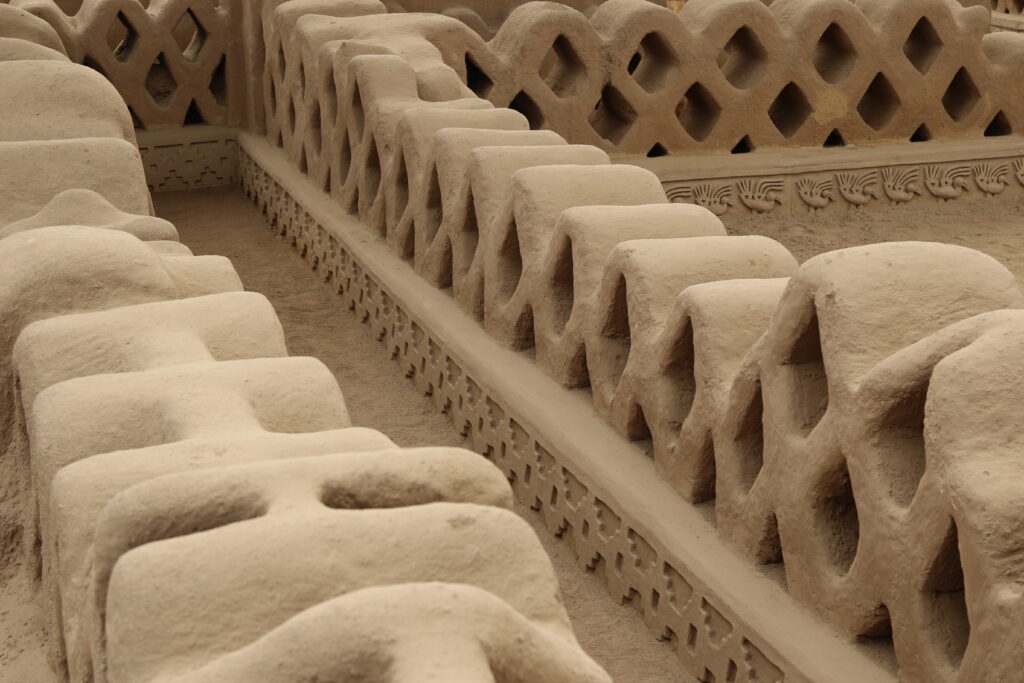
- The world’s largest adobe (mud-brick) city, covering around 7.7 square miles (20 square kilometers), with a dense urban core of about 2.3 square miles (6 square kilometers).
- Constructed between AD 850 and 1470 by the Chimu culture, who ruled a 600-mile (965 kilometer) stretch of northern Peru before the Inca conquered them.
- Ten massive walled citadels, housing plazas, storage rooms, burial platforms, and administrative buildings. Only a few (like Tschudi Palace) have been restored and are open to visitors.
- Elegant relief carvings of fish, birds, waves, and sea mammals decorate many walls, reflecting the Chimu’s deep connection to the ocean and their irrigation mastery.
Overview
Just 3 miles (5 kilometers) from the city of Trujillo, Chan Chan was once the capital of the Chimu Empire. Built entirely of adobe bricks in the coastal desert, this sprawling metropolis featured ten walled citadels, labyrinthine passageways, and ornate plazas. Peaking at a population of what’s estimated to have been 30,000 to 60,000, its scale and urban planning rivaled any pre-Columbian city in the hemisphere. Despite Incan conquest and Spanish plundering, much of its mud-brick architecture still remains intact, though conservation efforts are essential to combat erosion from coastal winds, occasional rains, and El Niño events.
Travel Tips
- Getting there: From Lima, fly (35 minutes) or bus (8 to 10 hours) to Trujillo. Then take a short 30-minute bus or a $2 taxi to Chan Chan.
- Entry & tours: Open Tuesday to Sunday, 9:00 AM to 4:00 PM. Entry is about 10 Peruvian soles (around $3). Hiring an official guide (around 60 soles/$18) is highly recommended since there’s minimal signage inside.
- Best time to visit: Coastal winter (June to August) brings cooler temperatures and clear skies. Summer (November to April) is warmer, windier, and may have light showers. Early morning visits help beat the heat.
- What to bring: Sunhat, sunscreen, water, sturdy shoes for walking on uneven adobe surfaces. Bring cash for entry, guide, and snacks since there are no ATMs on site.
- Local insight: Start at the on-site museum to get a sense of the city’s layout before exploring. Guides can explain citadel functions, irrigation systems, relief art symbolism, and conservation efforts.
6. Monkey Island, Iquitos
Ideal for: Wildlife lovers, ethical travelers, and anyone who’s ever dreamt of experiencing monkeys roaming freely around them. This is a perfect pick among all the hidden gems in Peru for those eco-conscious visitors who want to support real rescue and rehabilitation efforts in the Peruvian Amazon!
Highlights at a Glance
- A 1,112‑acre (450‑hectare) forest island just 19 miles (30 km) from Iquitos. It is home to rescued monkeys that are living in a cage-free environment.
- Hosts at least seven species, including woolly, howler, capuchin, titi, saki, spider, and pygmy marmoset monkeys.
- Visit includes feeding, guided nature walks, and potential sightings of other fascinating creatures such as sloths, birds, dolphins, and turtles, which makes this a standout among cool places in Peru.
- This is a conservation and education success story consists of rehabilitation, reforestation, and steady release of healthy primates back into the wild.
Overview
La Isla de los Monos (Monkey Island) started in 1997 as a rescue and refuge for orphaned and trafficked Amazonian monkeys. Today, this lush river island is a thriving sanctuary, with fruit trees planted for the animals and a growing community working to nurse them back to independence. Monkeys often approach visitors (with some of them even climbing onto your shoulders!) while many roam freely in the canopy. Guided walks through forest trails reveal fascinating flora, sloths lounging, and the meeting of the Nanay and Amazon rivers nearby.
Travel Tips
- Getting there: Boats depart from Bellavista‑Nanay port (15 min from the airport). Fast‑boats take about 1 hour; slower vessels can take a bit longer.
- Entry & tours: Entrance is 50 soles for foreigners (~$15 USD), with snacks or lunch often included via day‑tour packages. Guides are typically included and are great at identifying wildlife.
- Best time to visit: Year‑round access. Mornings are lively, mid‑day heat slows things down, and afternoons bring active monkeys and a chance to spot river dolphins.
- What to bring: Long pants and sturdy shoes for jungle trails. Wear sunscreen but, if possible, try and skip insect repellent and perfumes to protect the animals. Bring water and cash. There are no ATMs on site.
7. El Nuro Bay, Piura
Ideal for: Wildlife lovers, snorkeling fans, eco-conscious travelers, and anyone longing for gentle coastal charm with some rather delightful marine encounters. A highlight of hidden gems in Peru, especially for those who dream of swimming alongside sea turtles!
Highlights at a Glance
- A charming bay about 14 miles (23 kilometers) south of Mancora, framed by golden sands and rugged cliffs.
- Frequented by green sea turtles that swim and feed close to the pier. This is one of those places in Peru for tourists that’s perfect for swimming with sea turtles! Please be sure to keep a distance of at least 5 feet (1.5 meters) from these magical creatures!
- A laid-back fishing community with pristine waters, small boats buzzing about, and undisturbed natural beauty.
Overview
Nestled on Peru’s northern Pacific coast in the Piura region, El Ñuro is both a peaceful fishing village and a marine wildlife sanctuary. Beyond its scenic beach and rustic pier, this bay is a turtle hotspot, so much in fact that locals and conservation groups make it a big point to protect the green sea turtles that gather here throughout the year. Calm, gentle snorkel conditions make it ideal for those looking to enjoy the underwater world. No flashy resorts here, just authentic coastal vibes, a warm community, and conservation-oriented focus.
Travel Tips
- Getting there: Located about 90 miles (145 kilometers) north of Piura or 14 miles (23 kilometers) south of Mancora. Accessible by bus or colectivo along the Panamericana Norte, followed by a short taxi or moto ride.
- Top activities: Snorkeling or swimming with turtles from a small boat, strolling the sandy beach, enjoying fresh seafood right by the ocean.
- Best time to visit: Year-round, with calm ocean conditions most days. Summer (Dec–Mar) is warmer, while winter (Jun–Aug) brings mild coastal breezes.
- What to bring: Snorkel gear, reef-safe sunscreen, hat, sturdy sandals or water shoes, plenty of water and cash. No ATMs on-site.
8. Leymebamba & the Mummy Museum
Ideal for: Archaeology lovers, cultural history buffs, and intrepid travelers seeking eerie yet enlightening encounters with Peru’s Chachapoya civilization.
Highlights at a Glance
- A museum housing over 200 Chachapoya mummies (plus funerary artifacts), recovered from cliff tombs at nearby Laguna de los Condores.
- Thoughtfully designed with five exhibition rooms (including archaeology, ethnography, and educational spaces), set in landscaped grounds just outside Leymebamba.
- Mummies are impeccably preserved. Visitors will get to witness them wrapped in textiles, with sewn-on faces that offer striking insights into burial practices.
- The museum is part of a broader story: Laguna de los Condores archaeological zone with cliff mausoleums and sacred landscapes set above a cloud-forest lake.
Overview
Perched at about 7,200 ft (2,200 m) in the picturesque Utcubamba Valley, Leymebamba hosts a community-run museum that opened back in 2000 to preserve a trove of Chachapoya mummies and relics that had been salvaged from cliff tombs above Laguna de los Condores (more on this place in the following unique places to visit in Peru). These cliffside mausoleums, hidden for centuries, revealed astonishing discoveries in the mid-1990s, including spectacularly well-preserved bodies that had been wrapped in textiles and were surrounded by ceramics, quipus, and wooden figurines. The museum’s thoughtful setup—five rooms devoted to archaeology, ethnography, and education—provides an immersive look into pre-Inca Andean life and beliefs, and makes this a notable place among the hidden gems in Peru.
Travel Tips
- Getting there: From Chachapoyas, minibuses head to Leymebamba (about 1 hour 45 minutes). The museum is around 1.5 miles (2.5 km) uphill from town, so take a taxi up.
- Entry & tours: Open roughly 10 AM–4:30 PM. Entry is about 15 Peruvian soles (~$4.50 USD). English-speaking guides can be found locally and enhance the experience.
- Best time to visit: Dry season (June–September) offers clearer skies during travel; highland weather can vary year-round, so dress in layers.
- What to bring: Sun protection, water, sturdy shoes for uneven paths, and cash. No ATMs on site.
- Local insight: Combine your visit with a trek (or horseback ride) to Laguna de los Condores and its cliff mausoleums.
- Ideal for: Travelers intrigued by ancient Andean mysteries, archaeological preservation, and atmospheric mountain landscapes.

9. Laguna de los Condores: An Archaeological Wonder
Ideal for: Adventurous trekkers, archaeology fans, and travelers eager to discover dramatic prehistoric burial sites far from the tourist trail. Perfect for those who want an authentic Andean exploration coupled with some rather impressive cliff-edge spectacle.
Highlights at a Glance
- Remote cloud-forest lake measuring about 1.9 miles (3 km) long and 0.6 miles (1 km) wide, nestled at 8,500 feet (2,600 m).
- Cliffside chullpas (mausoleums) perched some 330 feet (100 m) above the water, built by the Chachapoyas and reused by the Incas.
- Site of a significant 1996–1997 discovery: Over 200 mummies, quipus, textiles, ceramics, and wooden artifacts that are now housed in Leymebamba Museum as mentioned above.
Overview
Laguna de los Condores, also called Laguna de las Momias (Lagoon of the Condors/Mummies), lies deep in the remote Andes near Leymebamba. It’s framed by steep cloud-forested slopes and cliffs dotted with Chachapoya mausoleums, which are tiny tomb towers carved into rock ledges overlooking the serene lake. Discovered by locals in 1996, the site revealed over 200 well-preserved mummies wrapped in textiles, accompanied by ceremonial artifacts. Some of these mummies are now exhibited in the Leymebamba Museum. Trekking to the site is physically demanding, with trails climbing to around 12,500 feet (3,800 m), but rewards visitors with haunting beauty and profound connection to the ancient past.
Travel Tips
- Getting there: Travel from Chachapoyas to Leymebamba by bus (about 2 hr). From there, start the trek. It’s typically 9–10 hours to the lake. Horse support is available.
- Trail & duration: Expect a full-day trek (or ride) through diverse landscapes. Some tours include overnight stays in basic cabins by the lake.
- Entry & tours: Guided treks are essential These include entry fees, horses/mules, cabins, meals, and transit. Multi-day tours range around S/700 (~ $190).
- Best time to visit: May–October (dry season) offers clearer trails and safer terrain. Rainy season brings slippery paths and clouds.
- What to bring: Trekking stick, waterproof jacket, layers, sturdy hiking boots, water, snacks, binoculars, and cash. A sleeping bag is recommended if camping.

10. Thermal Baths & Quiswarani Waterfall, Lares
Ideal for: Hikers looking to take it easy from their excursions, wellness seekers, culture lovers, and anyone craving a soothing soak and scenic break along the Lares Trek.
Highlights at a Glance
- Seven terraced thermal pools, with water temperatures ranging from 95 to 110°F (35 to 43°C), shaded by the stunning backdrop of green Andean mountains.
- Quiswarani (Qanchis Paccha) Waterfall: a series of seven cascading mini-falls fed by glacial runoff, nestled in a conservation area tended by a local community.
- Natural, community-run vibe: Basic bathhouses, shared changing areas, and healthy snacks sold by locals make this standout among hidden gems in Peru a rather low-key and authentic experience.
Overview
Hidden in the lush Lares Valley (that’s a part of the Sacred Valley of the Incas), the Thermal Baths at Lares offer a naturally blissful pause for all visitors with its multiple warm mineral pools that are fed by geothermal springs. It’s where weary legs can meet healing waters, all set in a valley of dramatic Andean peaks. Nearby, the Quiswarani Waterfall, also called Seven Falls, tumbles gently through cloud-forest cliffs, adding a refreshing splash to the day. Both are often packaged as part of the 3 to 5 day Lares Trek, but can also be visited independently from Cusco for a memorable side trip. Despite the warmth of its thermal waters, this is among the cooler places to visit in Peru.
Travel Tips
- Getting there: Options include guided Lares Trek itineraries or independent day trips—often via shared car or colectivo from Cusco to the baths, with a 1 to 2 hour drive from Calca.
- Top sequence: Soak in the hot springs first to ease aches; then hike 30 to 60 minutes to the Quiswarani Waterfall trailhead and wander through its cascading pools.
- Entry & vibe: Modest fee (3 to 10 soles/~$1-3) grants access to pools and waterfall paths. Rustic facilities, cash-only. Locals sell snacks and freshwater trout meals.
- Best time to visit: May to October (dry season) ensures clear, scenic trails and steady spring water. Afternoon cloud build-up can start in wetter months.
- What to bring: Swimwear, towel, sunhat, water, cash, and light snacks. We recommend comfy shoes for uneven terrain. Quick-dry towel and a fresh change of clothes for after the soak.
How to Visit These Places Safely & Comfortably
To visit these ten hidden gems in Peru safely and comfortably, it’s essential to plan with logistics, terrain, and weather in mind.
That’s why we recommend you start by checking transportation routes in advance, as many require transfers via small towns, colectivos, or even horseback. In addition to that, you’ll also want to allow for flexible timing and consider hiring local guides for both insight and safety.
For high-altitude spots like Kuelap, Laguna de los Condores, and Leymebamba, be sure to pace yourself, stay hydrated, and dress in layers to adjust to fluctuating mountain weather. In remote or rustic areas like Gocta, Monkey Island, and El Nuro, bring cash, water, snacks, and sun protection, as amenities and ATMs are scarce.
Footwear is critical: Bring sturdy hiking boots for treks and grippy sandals or water shoes for places like Huacachina and Lares. If possible, avoid rainy seasons when trails can be slippery (especially in cloud forests), though misty ambiance can add to the allure. Finally, respect all conservation rules and maintain distance from wildlife, avoid using repellents near sensitive animals, and support local communities by hiring ethical tour operators and buying local goods.