The Galapagos Islands, located off the coast of Ecuador, are one of the most iconic destinations in the world due to their extraordinary biodiversity. This archipelago and its remarkable national park—composed of 13 major islands and numerous smaller islands and islets—are a pristine natural laboratory that has captivated scientists, travelers, and nature lovers for centuries. And to make things even more enticing, in this year of 2025 it will gain the recognition of being ranked among the world’s 11 most spectacular National Parks!
The magazine La Vanguardia has highlighted the Galapagos Islands as one of the 11 most spectacular national parks in the world, according to Tripadvisor. This Ecuadorian archipelago is renowned for its unparalleled biodiversity, home to unique species like giant tortoises and Darwin’s finches. With landscapes that blend crystal-clear waters, volcanic formations, and extraordinary wildlife, the Galapagos stand out as a must-visit destination for those seeking to explore nature in its purest form.
Why the presitigious title, you might ask? Well, the Galapagos’ fame is largely thanks to its considerable role in the history of science. During his voyage in 1835, Charles Darwin managed to observe the unique species of flora and fauna inhabiting the islands. These observations were fundamental in developing his theory of evolution by natural selection, which ended up being one of the most important contributions to scientific knowledge.
In addition to its historical significance, the Galapagos National Park was declared a UNESCO World Heritage Site back in 1978. It is now one of the most protected destinations in the world, placing a tremendous focus on preserving the unique ecosystems it is home to, these of which harbor endemic species found nowhere else on our planet.
Activities and Attractions
The Galapagos National Park is an ideal destination for outdoor enthusiasts, offering a wide range of unique experiences in an unparalleled natural setting. Among the most notable activities are snorkeling and diving, which allow visitors to immerse themselves in the archipelago’s crystal-clear waters and discover an underwater world teeming with life. The aquatic adventures are nothing short of unforgettable, these of which range from swimming alongside sea turtles and sea lions to spotting hammerhead sharks and manta rays.

Additionally, visitors can explore remote areas of the National Park via Expedition Vessels and Day Tours, always in the company of a certified Naturalist Guide (as is required by the National Park). These excursions provide access to less-traveled corners of the archipelago, where one can enjoy pristine landscapes and observe the islands’ unique flora and fauna up close. Hikes along designated paths on islands in the National Park offer an excellent way to learn about the archipelago’s unique wildlife, geology, history, and conservation efforts, all while enjoying spectacular views.
Unique Features of the Galapagos National Park
The Galapagos National Park is distinguished by its consistently warm climate year-round, making it an attractive destination at any point on anyone’s calendar. The pleasant temperatures and consistent weather patterns truly do allow visitors to enjoy outdoor activities and explore the islands at anytime.
However, February is a particularly special month in the archipelago, as it coincides with the breeding season of many seabirds. During this period, visitors have the unique opportunity to witness fascinating wildlife behaviors, such as the mating rituals of iconic species like the blue-footed boobies and frigatebirds.
Wildlife
The biggest draw of the Galapagos National Park is the fact that it’s home to an incredible variety of entirely docile animals (that’s right: they won’t scurry away when you get close to them!), including some of the most iconic species that form a part of what we refer to as the “BIG15.” This unique collection of wildlife is what makes the archipelago a true natural paradise and shouldn’t be missed! Here’s a quick rundown of what they are:
- Galapagos Albatross
- Blue-Footed Booby
- Nazca Booby
- Red-Footed Booby
- Flightless Cormorant
- American Flamingo
- Frigatebirds: (Great and Magnificent)
- Galapagos Hawk
- Land Iguana
- Marine Iguana
- Santa Fe Land Iguana
- Galapagos Penguin
- Galapagos Sea Lion
- Galapagos Fur Seal
- Galapagos Giant Tortoise
And despite the above, make no mistake: Marine life is equally impressive. In the Galapagos, there’s a plethora of hammerhead and whale sharks frequenting dive sites like the highly remote islands of Darwin and Wolf (accessible only via liveaboard SCUBA diving cruises), massive manta rays, and sea turtles that can be seen both on the beaches and in waters throughout the archipelago. Additionally, schools of tropical fish offer an explosion of color underwater.
Regardless of whether they live on land or in the sea, all of these species play a crucial role in the ecological balance of the archipelago, making the Galapagos a unique and essential place for global biodiversity.
Flora
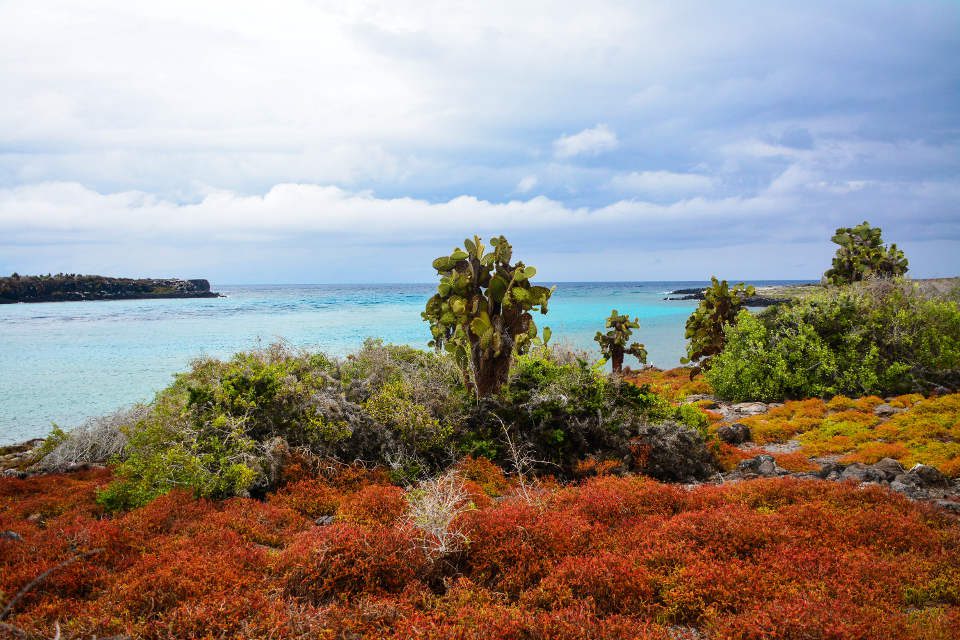
The Galapagos National Park hosts a plethora of unique flora, including endemic species like Scalesia trees, known as “Darwin’s trees,” and lava cacti, which have adapted to volcanic terrain. The vegetation varies significantly between islands, ranging from arid zones dominated by shrubs and cacti to lush highlands covered in dense vegetation. The extent of plant diversity in Galapagos reflects the archipelago’s gamut of environmental conditions and the unique branches of evolution they’ve inspired, offering a landscape that is just as fascinating as its fearless fauna.
Explore the Most Exclusive Side of the Galapagos
While the Galapagos is indeed renowned for its immense touristic appeal, there are less frequented corners that offer a deeper connection to its natural beauty, these of which are found within its epic National Park. If you opt to visit islands likeGenovesa, Fernandina, or Española, rest assured you’ll find untouched landscapes and astonishing wildlife far away from the crowds that frequent the inhabited dislands. These less-traveled areas in the National Park provide a much more tranquil experience, which is exquisite for those seeking to enjoy the pure, unbridled essence of the islands. Additionally, the sense of exclusivity and personalized guidance one can enjoy in the National Park—accessible via Expedition Cruise, Day Tour, or Liveaboard SCUBA Cruise—make the immersive tours here enriching, unique, and downright unforgettable.
By following these recommendations, you’ll avoid crowds and enjoy a more authentic experience that is guaranteed to deeply connect you to this ecological sanctuary. So, what are you waiting for? Prepare to discover the heart of the Galapagos, today!