Trying to figure out the best way to enjoy a maritime destination is not as easy as it sounds. There are a lot of factors to consider, including whether you want to stay aboard a ship the whole time as you sail around to different points of interest, or whether you prefer to get off at each visitor site and explore the wildlife and terrain on foot or via different activities. Perhaps you’d like a combination of these options?
In any case, you’ll need to decide what the right experience is for you. Is it an expedition cruise aboard a fully equipped and appropriately staffed vessel, or is it a smaller cruise aboard a ship that offers an intimate but limited experience of the destination? In this blog, we’ll try to explain some key differences between these options and point out some important factors to consider when making your decision.
What is an Expedition Cruise?
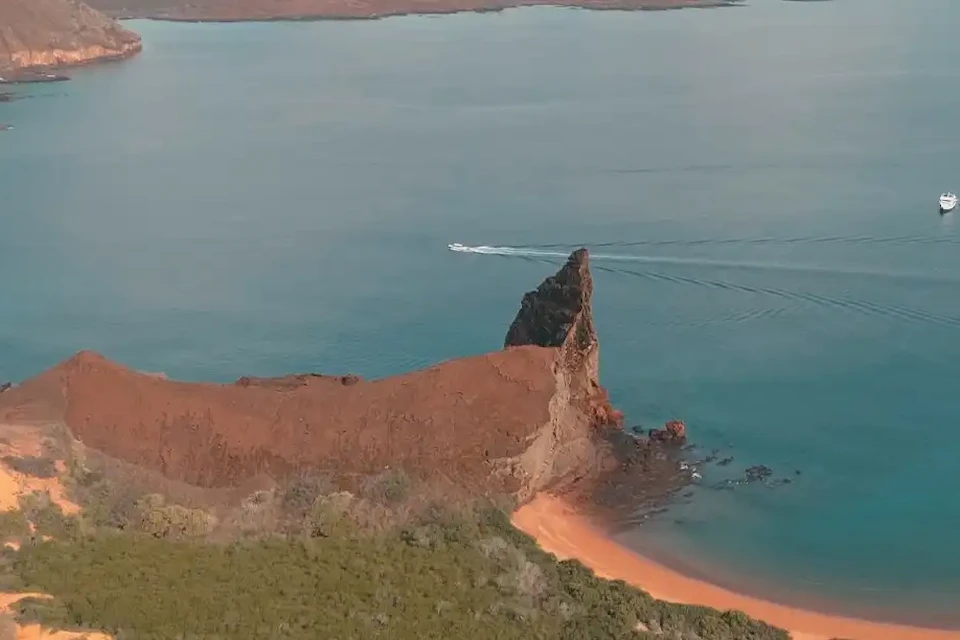
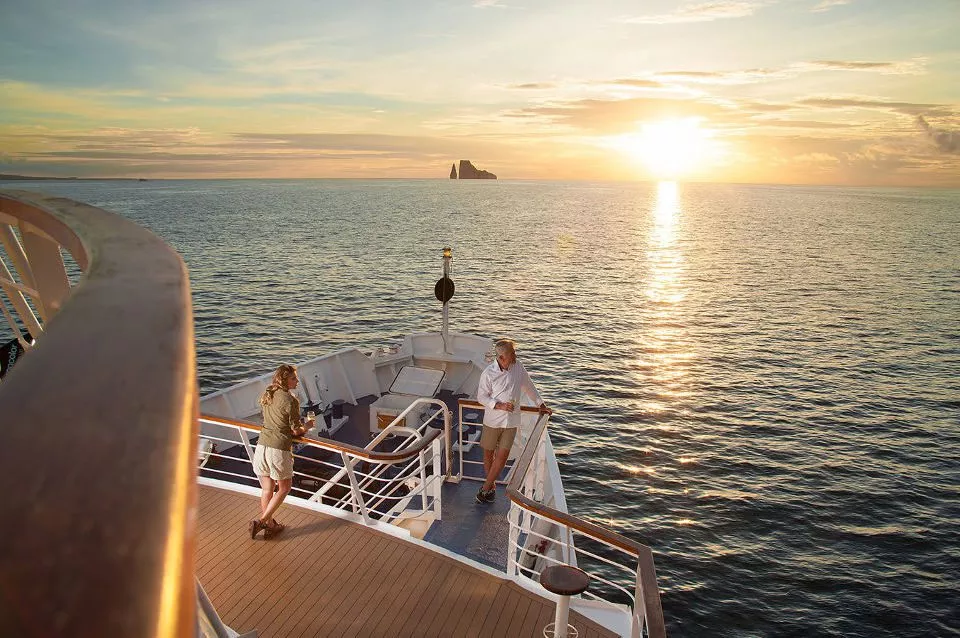
When you hear the word, “expedition”, how easy is it to think of adventure and discovery? Now think about a remote place where incredible species, unforgettable sunsets, and fascinating terrain come together in an ideal year-round climate. One such place is the Galapagos Islands, and an expedition cruise is arguably the best way to experience the archipelago.
An expedition cruise is a specialized type of voyage designed for in-depth exploration, offering a unique and immersive way to discover remote destinations. In the case of the Galápagos Islands—located just 600 miles (1,000 kilometers) off Ecuador’s coast in the Pacific Ocean—it provides the most complete experience, allowing travelers to access pristine sites with expert guidance. If you’d like to learn more about what makes an expedition cruise better than a simple, small cruise ship, read on.
The Difference between Expedition Cruises and Small Cruise Ships
While most cruise companies regard small cruise ships to be any vessel with fewer than X amount of people, the variable is rather arbitrary to be honest. We need to zoom out a little and look at all the boats and vessels operating in the region. In this case, the Galapagos Islands’ largest passenger vessels top out at a capacity of around 100 passengers. By many industry standards, all live-aboard ships of this size and smaller are considered small cruise ships.
Just what is an expedition cruise and how can we distinguish between it and a small cruise ship? Well, to answer the first question, an expedition cruise can refer to a vessel or a journey on water, through a destination where the vessel makes regular stops at visitor sites and passengers can explore the destination through a variety of activities. In Galapagos, to distinguish between an expedition cruise and a basic small ship tour, we can point out a few key factors.
The Implication for Small Cruise Ships
Small ships, ones with fewer passengers, lack the scale needed to offset high operational costs. This makes it very challenging for them to provide the level of services and personnel found on even slightly larger vessels, limiting the amenities and quality of service they can offer passengers.
By nature, small vessels must prioritize cost efficiency and sacrifice certain services that require significant resources to maintain, which can affect the overall passenger experience.
Conversely, a small ship may not be able to guarantee certain essential services, such as a full team of officers, a dedicated expedition leader, and a doctor with a fully equipped infirmary. This last item really gives certain travelers some welcome peace of mind.
Ecological Footprint of Expedition Cruises
Even as the number of ships operating in the Galapagos is relatively low in comparison with other maritime destinations (there are about 70 vessels offering expedition-type experiences in the Galapagos, though many can simply be regarded as small ship cruising), poorly designed, inefficient ships with a large imbalance between ship size and passenger numbers, can indeed be detrimental to the environment.
The simple explanation for this is that to transport visitors to various sites throughout the islands, ships need to have Park-approved itineraries with meticulously scheduled embarkations and disembarkations. When a larger ship is not at capacity, per-person transportation costs are much higher, and the amount of fuel spent per-person is much greater. This can result in a much larger carbon footprint.
Conversely, smaller ships and expedition vessels are much easier to adapt with friction-reducing paint, which can really help to reduce drag and increase fuel efficiency. Here too, if you’re concerned about your carbon footprint, certain ships, like La Pinta and Isabela II, offer passengers the chance to offset travel-related carbon footprints.
Multi-guided Expedition Vessels
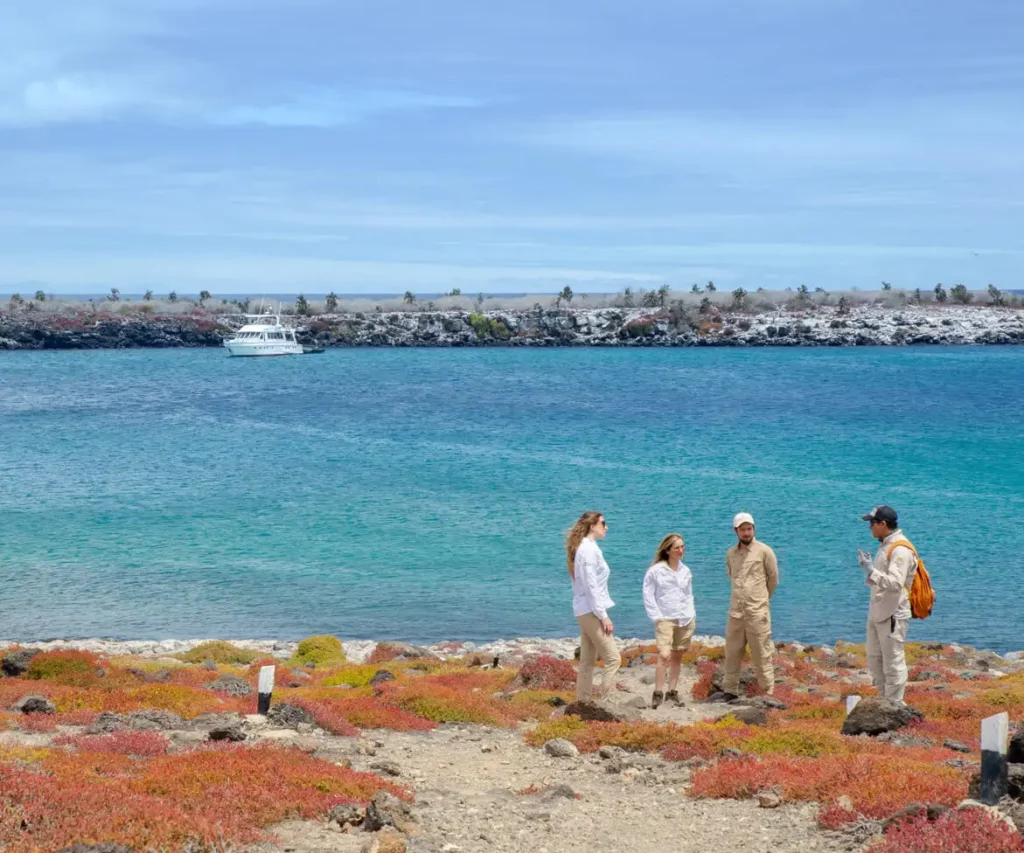
One other reason why a journey through the Galapagos aboard luxury expedition cruises like Yacht La Pinta or Yacht Isabela II can be so satisfying is the fact that they count on multiple Park-certified naturalist guides, many of whom speak more than one or two languages. Having this many guides, means there are options for families and groups to enjoy different activities at the same. For example, one guide may offer a hiking tour while another leads guests on a panga or kayak tour along the shoreline.

What is it like to explore on expedition cruises?
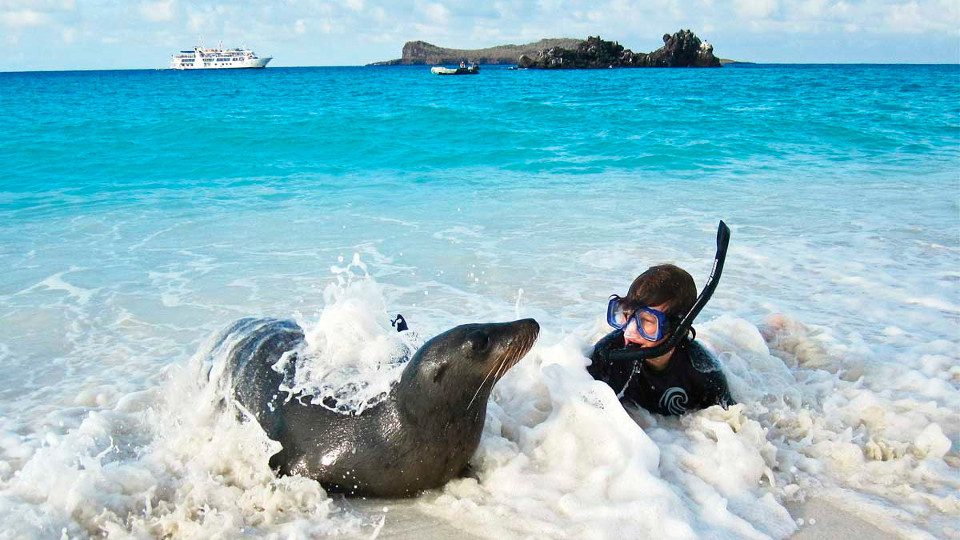
While the information in this blog offers insights as to size, comfort, and efficiency, we haven’t really addressed what makes an expedition cruise in the Galapagos so special. A big part of it is the unique and incredible species that you’ll only ever see and observe in the Galapagos. For a full understanding of these iconic creatures, check out this blog about the Galapagos Big15. Keep in mind that Galapagos wildlife is unique in that many species have no natural fear of humans. Because of this, it is possible to observe them from a close, Park-mandated minimum distance of a little more than 6 feet (2 meters). Just imagine the incredible photographic images you’ll capture!
Expedition Cruises in Galapagos
Expedition cruises in the Galapagos are truly one of the most exciting experiences travelers can enjoy. There’s no other place like it on the entire planet. That said, not all expedition cruises are the same. Some take place on very large ships, while others take place on much smaller ones. Finding the right fit for you and your travel companions is key. As such, there are some issues with oversized ships and there are some services that aren’t available on ships that are too small.
Oversized ships can be quite excessive, not just in their elevated operating costs, higher fuel, water, and electricity consumption, but in other things too. Amenities are terrific, but some aren’t all that necessary when the main attraction is really the destination itself. So, we recommend you analyze the amenities available on your prospective expedition cruises and determine for yourself whether they will really enhance your experience or not.
An oversized ship’s size in comparison with their passenger capacity makes them unnecessarily expensive to operate. Just imagine the expense of air conditioning for an entire ship aboard which there may be a high number of empty cabins. The larger the ship, the more interior and exterior spaces there are to clean, maintain and keep cool. This takes time, energy, resources, and money.
Activities on Expedition Cruises
Another reason why Galapagos adventures are some of the best expedition cruises around is the number of fun activities through which you can explore the islands. Park-approved activities include:
- Snorkeling
- Paddleboarding
- Kayaking
- Glass-bottom Boat Rides
- Swimming
- Hiking, and
- Panga (a.k.a. Zodiac or dinghy boat) Rides
All these Park-approved activities are possible thanks to expedition vessels being equipped with plenty of space in which to store and deploy all this fun gear! Expedition yachts, because of their size, can support stronger and larger davits (lifting equipment) without compromising their stability.
In essence, an expedition cruise involves a different kind of vessel than a basic small ship, one that can accommodate the equipment for each of the Galapagos National Park-approved exploration activities. Having a variety of activities at your disposal means you can enjoy an immersive and dynamic exploration of the islands.
Expedition Cruise vs Small Cruise: Which one is better?
Exploring the Galapagos requires versatility to access diverse areas and engage in active excursions. Therefore, it’s best to be equipped with multiple guides, expedition-style gear, an onboard medical officer, and experienced personnel. Some of the best expedition cruises, like Yachts La Pinta and Isabela II, offer the right tools to enhance this once-in-a-lifetime adventure. Smaller vessels simply can’t match their ideal passenger-space ratios, comfort, efficiency, stability, and luxury. These truly are the better choice for navigating and enjoying the beauty and uniqueness of the Galapagos Islands.