Skip to content
The Peruvian Amazon is a vast region spanning over 60% of Peru’s territory, encompassing one of the most biodiverse ecosystems on the planet. This incredible rainforest sanctuary is home to more than 1,800 bird species, 500+ mammal species, and countless endemic animals found nowhere else on Earth. From the elusive jaguar to the vibrant poison dart frog, from giant river otters to the iconic pink river dolphins, the wildlife here represents nature at its most spectacular and untamed.
Visiting the Peruvian Amazon is a truly unique and exciting, once-in-a-lifetime experience that immerses you in ancient forests, winding rivers, and indigenous cultures that have thrived here for millennia. Whether you’re gliding silently along flooded forests in a canoe, spotting macaws at a clay lick, or listening to the nocturnal symphony of the jungle, every moment offers something extraordinary. Understanding the best time to visit the Peruvian Amazon is essential, as the seasons greatly influence wildlife sightings, river levels, and overall travel experiences. The answer ultimately depends on what you most want to experience.
Understanding the Seasons in the Peruvian Amazon
The Peruvian Amazon weather follows two distinct seasons that dramatically shape the landscape and visitor experience. Unlike temperate climates with four seasons, the rainforest operates on a simpler cycle: the dry season and the rainy season. These seasons don’t bring drastic temperature changes, but they significantly impact water levels, wildlife behavior, and the activities available to travelers.
Temperature and humidity remain remarkably consistent year-round, with daytime highs typically ranging from 86°F to 95°F (30°C to 35°C). Nighttime temperatures cool slightly to around 70°F to 75°F (21°C to 24°C). Humidity hovers between 80% and 100% throughout the year, creating that characteristic jungle atmosphere. What truly distinguishes the seasons is rainfall and its cascading effects on the Amazon ecosystem.
Best Time to Visit the Peruvian Amazon by Season
Dry Season (May to October)
The Peruvian Amazon dry season brings less frequent rainfall and lower river levels, revealing sandy beaches along the Amazon River and its tributaries. During these months, you’ll still experience occasional showers —this is a rainforest, after all— but they’re shorter and less intense than during the wet season. The reduced cloud cover often means clearer skies and spectacular sunsets over the canopy.
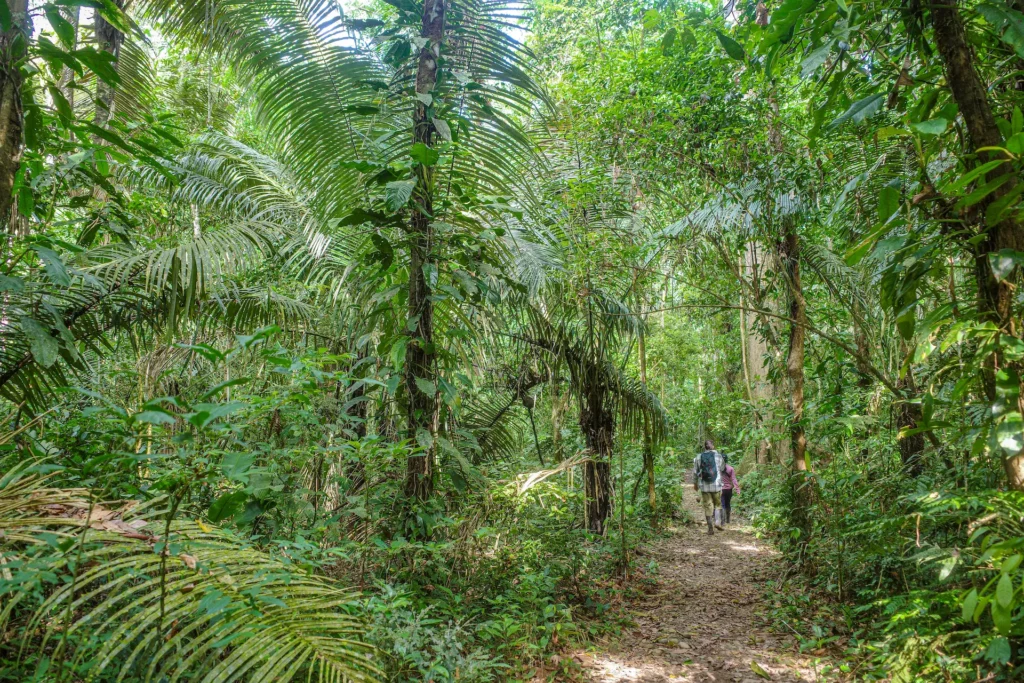
Weather conditions during the dry season create excellent opportunities for hiking through the jungle on trails that would be muddy or flooded at other times of year. River levels drop considerably, exposing riverbanks and creating natural pools perfect for swimming. Wildlife spotting becomes easier as animals congregate around shrinking water sources and venture out in search of food and water.
Activities during this period include extensive jungle treks, river excursions and exceptional birdwatching as birds gather near permanent water sources. The lower water levels also make it easier to spot caimans, capybaras, and giant river otters along the riverbanks. Anglers find this the best season for fishing, particularly for peacock bass and catfish.
Rainy Season (November to April)
The Peruvian Amazon rainy season transforms the forest into an aquatic wonderland. Increased rainfall and warmer temperatures cause rivers to swell dramatically, sometimes rising 30 feet (9 meters) or more. Rain showers are frequent and can be intense, but they’re often short-lived and followed by bright sunshine steaming through the canopy.
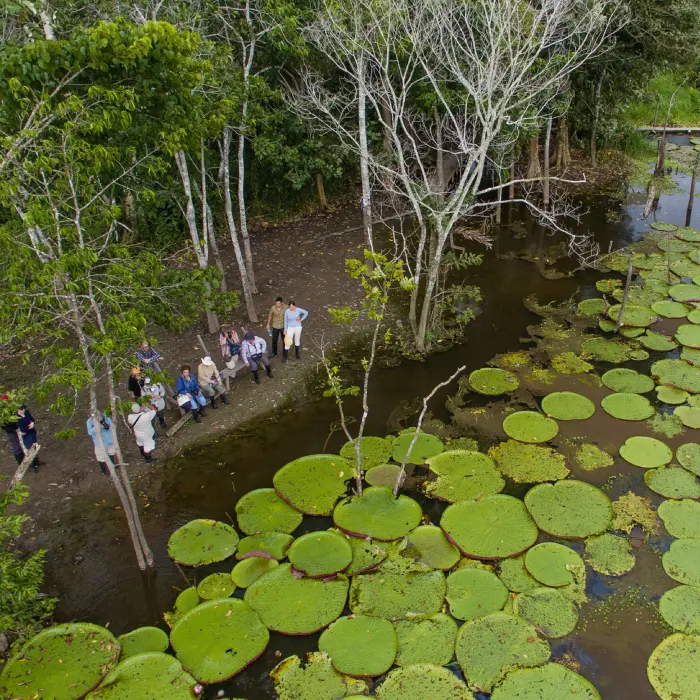
Lush landscapes define this season, with the forest bursting into vibrant green growth and countless plants flowering and fruiting. The high water creates a magical environment where, depending on activity availability, visitors and guides can paddle canoes and kayaks directly through the flooded forest, navigating between tree trunks and coming face-to-face with wildlife at canopy level. Fewer visitors travel during these months, offering a more intimate and peaceful experience for those who embrace the wet conditions.
Activities shift toward water-based exploration. You can kayak through flooded igapó forests, an otherworldly experience available only when Amazon River levels Peru are at their peak. This is prime time for spotting pink river dolphins, which venture deeper into the forest to hunt. Birdwatching remains excellent, particularly for spotting colorful toucans, parrots, and the prehistoric-looking hoatzin.
Best Months to Visit the Peruvian Amazon
If you’re wondering about the best month to visit Peruvian Amazon destinations, June through August represent peak season for good reason. These months offer the most predictable weather within the dry season, with minimal rainfall and comfortable conditions for all activities. Wildlife is concentrated and visible, trails are accessible, and the overall experience appeals to the widest range of travelers.
The benefits of visiting during peak season months include optimal conditions for photography, the ability to combine jungle treks with river excursions, and the best chances of spotting elusive wildlife like jaguars near water sources. Lodges and tour operators are fully staffed and running all available programs.
However, the advantages of visiting in the off-season shouldn’t be overlooked. February and March, at the height of the rainy season, offer the most dramatic flooded forest experiences and the best opportunities to see pink river dolphins and monkeys feeding in fruiting trees. December and April serve as shoulder months with fewer crowds and competitive pricing while still offering good weather and wildlife viewing.
When considering the best month to visit Peruvian Amazon areas, also think about specific wildlife interests. If macaws and parrots are your priority, September and October are excellent as many species congregate at clay licks. For butterfly enthusiasts, the transition months of October and November showcase incredible diversity.
Wildlife Viewing Throughout the Year
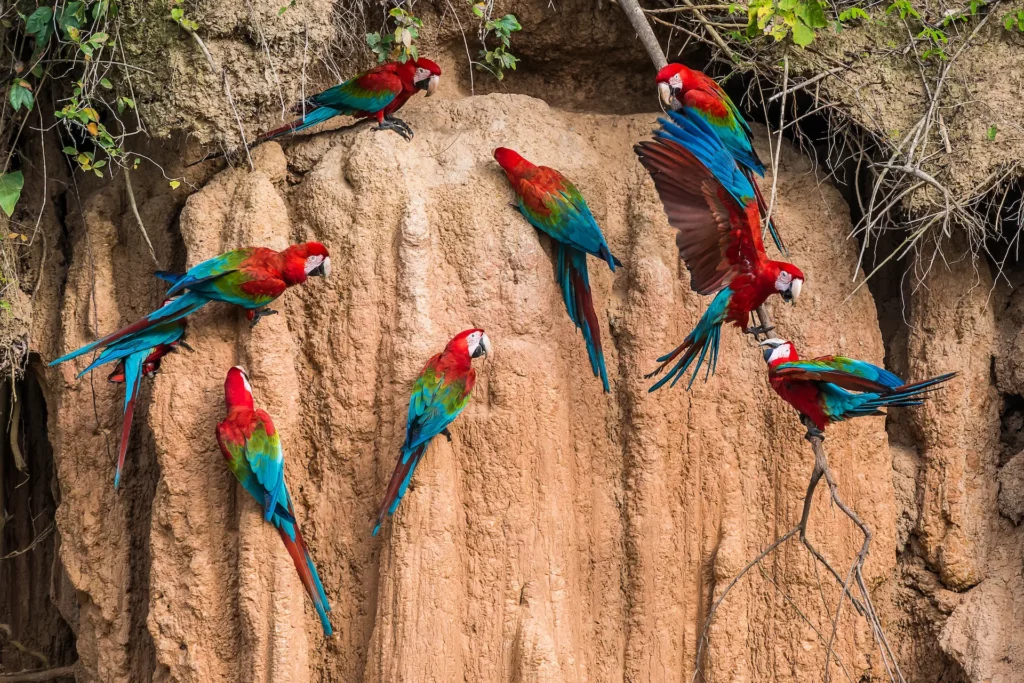
The Peruvian Amazon wildlife season is truly year-round, but different times favor different species. Birds are active and visible throughout the year, though the dry season offers easier spotting when they gather near water sources. Clay lick activity peaks between August and October when macaws, parrots, and parakeets descend to these mineral-rich sites in spectacular displays each morning.
Monkeys, including howlers, capuchins, squirrel monkeys, and tamarins, are present year-round but are easier to observe during the rainy season when fruiting trees draw them to feeding spots. The higher water levels also bring them closer to boats as they move through the canopy.
Pink river dolphins become most visible and active during the high-water season from January through May. The flooded forests provide them access to new hunting grounds, and they’re often seen feeding in channels and lagoons that are inaccessible during low water.
Reptiles, including caimans, anacondas, and various turtle species, are more easily spotted during the dry season when they bask on exposed riverbanks and beaches. However, dedicated nighttime caiman-spotting excursions work well year-round, as their eyes reflect flashlight beams regardless of water level.
River Levels and How They Affect Your Experience
Understanding the relationship between high-water season and low-water season is crucial for planning your trip. During low-water months (July through October), rivers can drop 20–30 feet (6–9 meters) below their peak, exposing vast sandy beaches and mudflats. This dramatically changes the landscape and the types of excursions available.
Low water creates opportunities for long riverside hikes and exploration of areas that are submerged half the year. Navigation can become challenging in smaller tributaries, and some remote lodges may only be accessible via alternative routes. However, the exposed terrain reveals fascinating geological features and creates excellent conditions for spotting wildlife concentrated around remaining water sources.
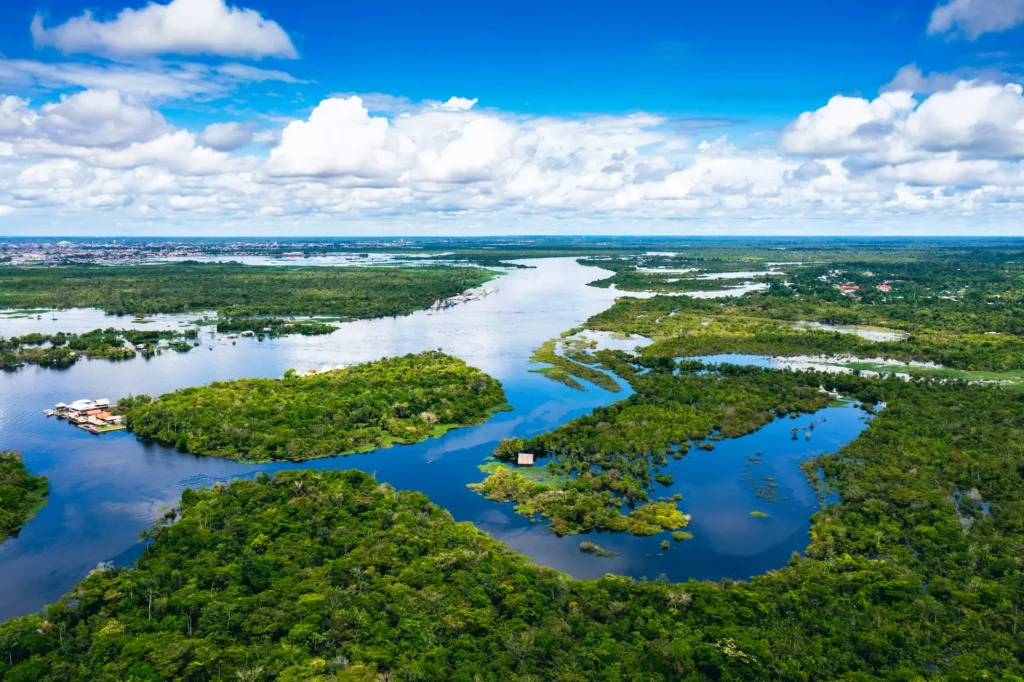
High water (February through May) floods the forest up to the tree trunks, creating igapó and várzea environments where the boundary between river and forest disappears. Canoe trips through the flooded forest offer an intimate, almost meditative experience as you glide silently among the trees. Accessibility improves to remote areas, and boat travel becomes faster and easier. The tradeoff is that hiking opportunities diminish, and some wildlife disperses throughout the vast flooded landscape.
The impact on excursions varies by lodge location and river system. Lodges on major rivers like the Amazon or Ucayali experience less dramatic variation than those on smaller tributaries. Always check with your tour operator about current conditions and which activities will be available during your travel dates.
Travel Tips for Visiting the Peruvian Amazon
Packing for the climate in the Amazon requires balancing protection from rain, sun, insects, and humidity. Lightweight, quick-drying clothing in neutral colors works best. Long sleeves and pants protect from sun, insects, and vegetation while trekking. Even during the dry season, rain can strike unexpectedly, so waterproof gear is essential year-round.
Remember that packing for the climates you’ll experience on your way to and from the Amazon is equally important. Most visitors fly through Lima or Cusco, cities with dramatically different climates. Lima’s coastal climate is mild and often foggy, while Cusco sits at high altitude with cool temperatures and intense sun. Layer your clothing and pack a day bag with items you’ll need for these transitional environments.
What to Pack
Clothing and footwear recommendations include:
- Lightweight, breathable fabrics that dry quickly
- Moisture-wicking shirts
- Convertible pants
- At least one long-sleeved option for evening protection against mosquitoes
- Two pairs of shoes: Lightweight hiking boots or trail shoes for jungle treks, and water-resistant sandals or water shoes for boat trips and wet conditions
- Rain gear and sun protection (these are non-negotiable, regardless of when you visit)
- A quality rain jacket and rain pants will see daily use even in the dry season.
- A wide-brimmed hat provides crucial sun protection
- A bandana or buff protects your neck.
- Reef-safe sunscreen (to apply liberally, given your proximity to the equatorial sun
- Sunglasses (preferably polarized for reducing glare on the water).
Additional essentials include insect repellent with DEET, a headlamp with red light mode for night excursions, binoculars for wildlife viewing, and a dry bag to protect electronics and valuables during boat trips. A reusable water bottle, basic first aid supplies, and any personal medications round out your packing list.
Finding the Ideal Time to Explore the Peruvian Amazon
Determining the best time to visit the Peruvian Amazon ultimately depends on your priorities and what you most want to experience. If your dream involves spotting jaguars, hiking deep into primary forest, and experiencing comfortable conditions with minimal rain, the dry season months of June through September deliver consistently excellent experiences.
If you’re drawn to the mystical beauty of flooded forests, intimate encounters with pink river dolphins, and the advantage of fewer tourists sharing your adventure, the rainy season offers rewards that more than compensate for wetter conditions. The shoulder months of May and October provide middle-ground options with elements of both seasons.
The best time to visit the Peruvian Amazon is also influenced by practical considerations like your schedule, budget, and the specific lodge or region you plan to explore. Each section of the Peruvian Amazon —from the accessible areas near Iquitos to the remote wilderness of Manu National Park or Tambopata— has its own microclimate and optimal visiting windows.
Regardless of when you choose to visit, the Peruvian Amazon promises an unforgettable journey into one of Earth’s most magnificent wilderness areas. By understanding the seasonal variations and preparing appropriately, you’ll be ready to embrace the magic of the rainforest in all its humid, vibrant, teeming glory. The best time to visit the Peruvian Amazon is ultimately the time when you’re ready to answer its wild call and immerse yourself in an adventure that will stay with you forever.