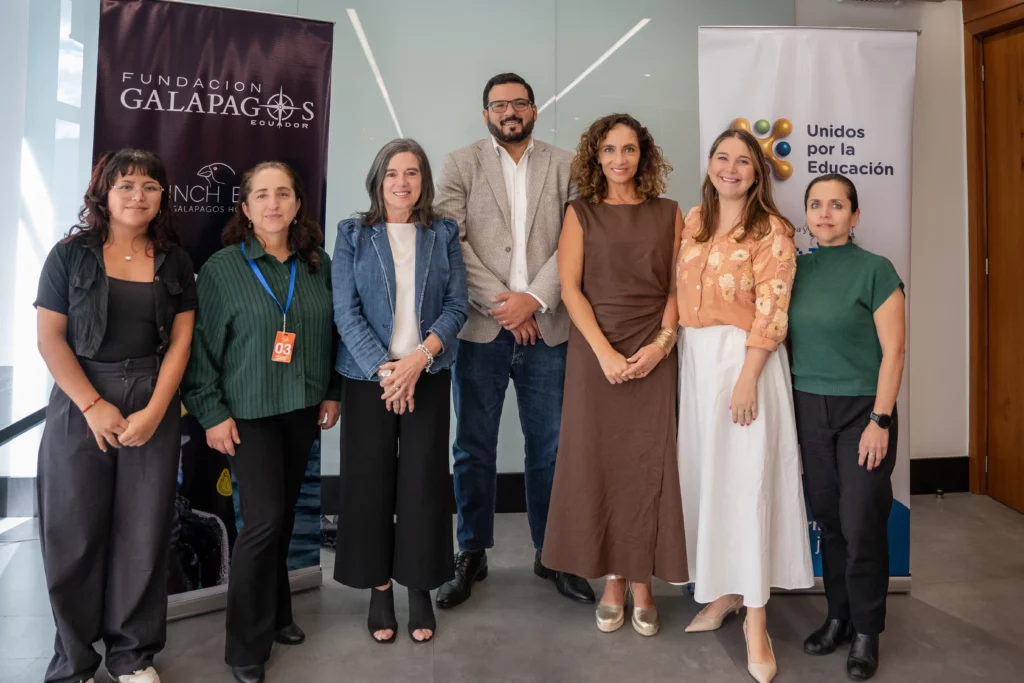
Conserving Galápagos also means investing in education for conservation and in the people who inhabit the islands. Under this premise, Fundación Galápagos Ecuador, Finch Bay Hotel, Metropolitan Touring, and Fundación Unidos por la Educación (UxE) signed a cooperation alliance to promote initiatives that strengthen education as a fundamental pillar of sustainable development in the archipelago.
The alliance stems from a shared conviction: protecting one of the planet’s most important ecosystems also means helping the communities that inhabit it gain better opportunities to build their future.
Along this path, education plays a fundamental role. It not only expands opportunities but also shapes new generations capable of understanding, valuing, and protecting the natural and cultural heritage of Galapagos.
An Alliance That Begins by Improving Learning Conditions
As its first joint project, Metropolitan Touring, through Fundación Galapagos Ecuador, will contribute to the construction of a new block of sanitation facilities at the Galo Plaza Lasso Basic Education School on Santa Cruz Island.
The intervention will directly benefit 601 students and 32 teachers and will seek to improve the infrastructure of one of the community’s educational centers. Although a sanitation facility may seem, at first glance, a basic infrastructure project, its impact goes far beyond physical construction. Having adequate, safe, functional, and usable bathrooms is part of creating a dignified and healthy learning environment.
International evidence supports this connection. The WHO notes that inadequate water, sanitation, and hygiene services can affect school attendance and academic performance. A school environment with adequate WASH services—water, sanitation, and hygiene—helps protect health, dignity, and the conditions students need to learn.
When a Bathroom Is Also Part of Education
The relationship between sanitation infrastructure and education is especially relevant in the context of Ecuador. According to information from UNICEF Ecuador, of the 15,665 educational centers analyzed, 2,663 lack an adequate water source, and only 31% of public schools have simultaneous access to water, sanitation, and hygiene services. This data comes from the WASH assessment conducted by the Ministry of Education and UNICEF in 2020. The same organization warns that deficiencies in water, sanitation, and hygiene can affect the health, cognitive development, educational quality, and school attendance of children and adolescents.
That’s why improving sanitation facilities isn’t just about meeting a physical need: it means helping make the school a safer, healthier, more inclusive, and more dignified space.
It also has an equity dimension. UNICEF highlights that adequate, private sanitation facilities can help keep girls in school during menstruation. In this context, investing in sanitation infrastructure is also an investment in wellbeing, dignity, health, and educational continuity.
Ecuador’s own Ministry of Education acknowledges that adequate educational infrastructure enables students to study in dignified, safe conditions and notes that providing water, sanitation, and hygiene reduces the risk of disease and helps make schools conducive to learning.
Galapagos: Conserving Nature and Strengthening Its Communities
In a territory like Galapagos, where ecosystem conservation and community wellbeing are deeply connected, strengthening education takes on an added dimension.
The girls, boys, and young people who study on the islands today will be the ones who, in the future, make decisions, launch ventures, work in strategic sectors, and lead initiatives tied to the conservation and development of their communities. For this reason, for Metropolitan Touring, helping improve their learning conditions is part of a vision of tourism that seeks to generate value beyond the visitor experience.
The alliance between Fundación Galapagos Ecuador, Finch Bay Hotel, Metropolitan Touring, and Fundación Unidos por la Educación seeks precisely to move in that direction: pooling capabilities, knowledge, and resources to generate solutions with a positive and lasting impact on the archipelago’s communities.
As our President, Paulina Burbano de Lara, said at the signing of the agreement: “At Metropolitan Touring, we believe education is one of the most powerful tools for driving sustainable development and creating opportunities for communities. This alliance with Fundación Unidos por la Educación allows us to turn our commitment to Galapagos into concrete actions that improve the quality of life for hundreds of students and teachers. We are convinced that, working alongside strategic partners, we can help build a better future for the islands and their people.”
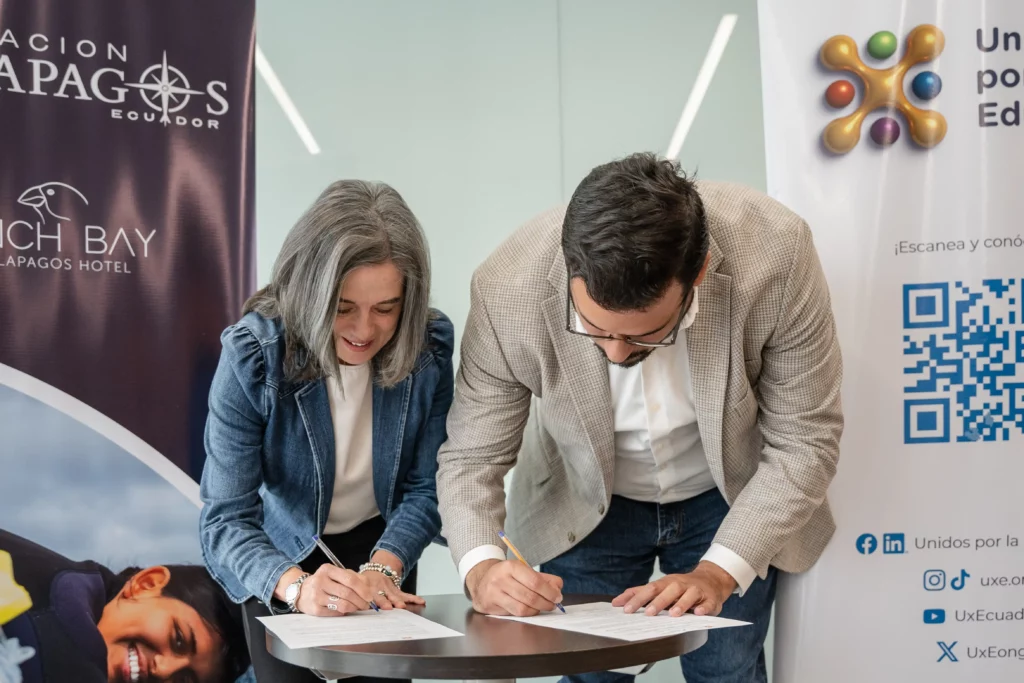
For his part, Juan Pablo Guerrero, executive director of Fundación Unidos por la Educación, highlighted the importance of building alliances among organizations committed to the country’s development to reduce gaps in educational infrastructure and expand opportunities for children and young people.
More Than 25 Years Working for Galapagos
This new alliance adds to more than 25 years of work by Fundación Galapagos Ecuador in the archipelago.
Since 1998, the Foundation has driven initiatives related to local development, education, research, and conservation, guided by a vision focused on the regeneration of Galapagos. During this time, it has mobilized more than USD 2.4 million for projects related to comprehensive waste management, recycling, coastal cleanup, education, scientific research, and ecosystem conservation. Its work is carried out in collaboration with public institutions, social organizations, communities, and strategic partners, based on one essential premise: sustainable solutions require the participation and shared responsibility of diverse stakeholders.
The Impact Also Starts at Home
The intervention at the Galo Plaza Lasso Basic Education School also has a direct connection to the community surrounding Finch Bay Hotel.
16% of the hotel’s employees’ children attend this school, so improving its facilities also contributes to the wellbeing of families in the hotel’s community. Finch Bay Hotel builds this connection to the local area into various aspects of its operations, from hiring local talent to sourcing goods and services from Galapagos suppliers and supporting local island entrepreneurs.
This perspective reflects a way of understanding tourism in which the success of an operation is measured not only by the experience it offers visitors, but also by the value it generates in the territory where it operates.
Regenerative Tourism: Leaving a Positive Mark
For Metropolitan Touring and Fundación Galapagos Ecuador, regenerative tourism means taking on a responsibility that goes beyond simply reducing impact.
It means actively contributing to the preservation of ecosystems, strengthening communities, and giving new generations better tools to build their own future.
In Galapagos, conservation and community are not separate paths. Protecting biodiversity also depends on having people who can develop skills, create opportunities, and become active participants in conserving their own territory.
That’s why this alliance represents much more than the construction of new sanitation infrastructure.
It represents an investment in 601 students, 32 teachers, hundreds of families, and, above all, in future generations of Galapagos residents.
It is also the first step in a collaborative agenda that seeks to continue strengthening education in Galapagos and generate lasting, positive impacts on island communities.
Because conserving Galapagos also means caring for those who will make its future possible.